
Postoperative care for dogs and cats
A soft swelling after surgery may be a pocket of fluid, but not every postoperative lump is harmless or safe to identify at home.
Does this need emergency care?
Seek emergency care now for an incision opening with tissue protruding, uncontrolled bleeding, collapse, or difficulty breathing. Call ahead when possible.
Call the surgical team today about a new lump, even if your pet seems comfortable. Increasing swelling, pain, redness, discharge, poor appetite, or unusual tiredness needs prompt guidance. If the team is closed or unavailable, call an emergency clinic for triage.
Veterinary Referral Center of Central Oregon’s incision guide distinguishes emergency incision problems from swelling in an otherwise well pet.
What is a seroma?
Surgery separates layers of tissue and affects tiny blood and lymph vessels along the way. While those layers heal back together, a small space can remain under the skin. Veterinarians call it dead space. When clear fluid settles there, the result is a seroma.
That is different from a hematoma, which is mostly blood, or an abscess caused by infection. A hernia or an opening beneath the skin can create a lump, too. From the outside, these problems can be difficult to tell apart, even with a good photograph.
What does normal incision healing look like?
For an incision that was closed after surgery, look for edges that stay together and a clean, dry surface. Some early pinkness, bruising, or mild swelling can occur. The direction of change matters: a site becoming redder, wetter, more swollen, or more painful deserves a call. ACVS describes these incision checks.
A small bump can also reflect a reaction around buried sutures. Seattle Humane notes this after spay and neuter surgery. Have the surgical team assess a new lump rather than assuming it is a stitch or a seroma.
What does a seroma look and feel like?
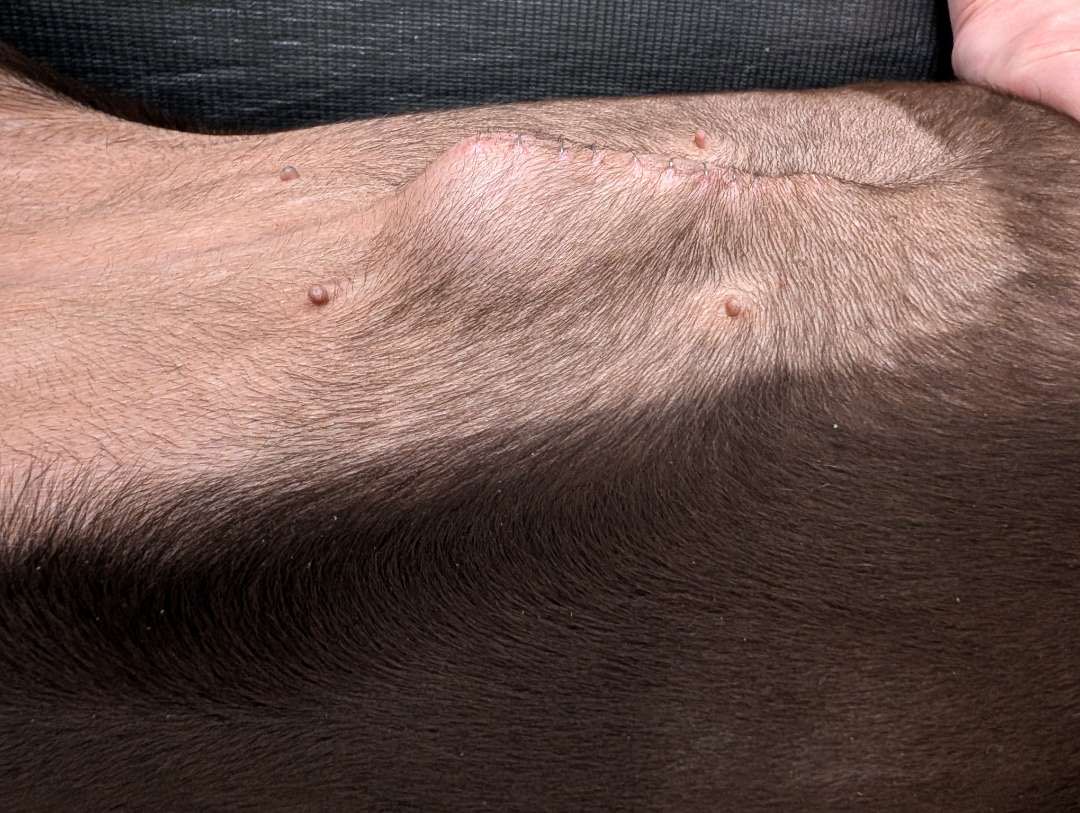
Owners often notice a soft or slightly firm bulge beneath or beside the incision. The incision may still look clean, dry, and closed, and the area may not seem especially painful. A larger fluid pocket can feel a little like a water balloon beneath the skin.
Why rest still matters when your pet feels fine
This is often the hardest part of recovery: your pet may feel ready to run before the incision is ready for that much movement. Jumping, climbing, rough play, and off-leash activity pull healing tissue layers back and forth. That motion can give fluid more room to collect beneath the incision.
Stick with the recovery plan you were given, even when your dog or cat seems completely back to normal. Rest timelines vary by procedure, so your discharge instructions matter more than a general number of days found online. The American College of Veterinary Surgeons also recommends activity restriction and daily incision checks after surgery.
Will a seroma go away on its own?
Often, an uncomplicated seroma slowly becomes smaller as the body reabsorbs the fluid and the tissue underneath heals. That can take several days and sometimes a few weeks. The timeline depends on the surgery, the size and location of the pocket, and the individual pet.
Still, “wait and see” should not be the starting point for every lump. Your veterinarian may ask for a photo, want to examine the incision, or recommend testing to rule out bleeding, infection, or a problem with the closure.
Recovery at about three weeks
The earlier photographs show swelling near an abdominal incision during postoperative recovery. The final photograph was taken about three weeks after surgery, when the bump had gone down and her belly had healed.
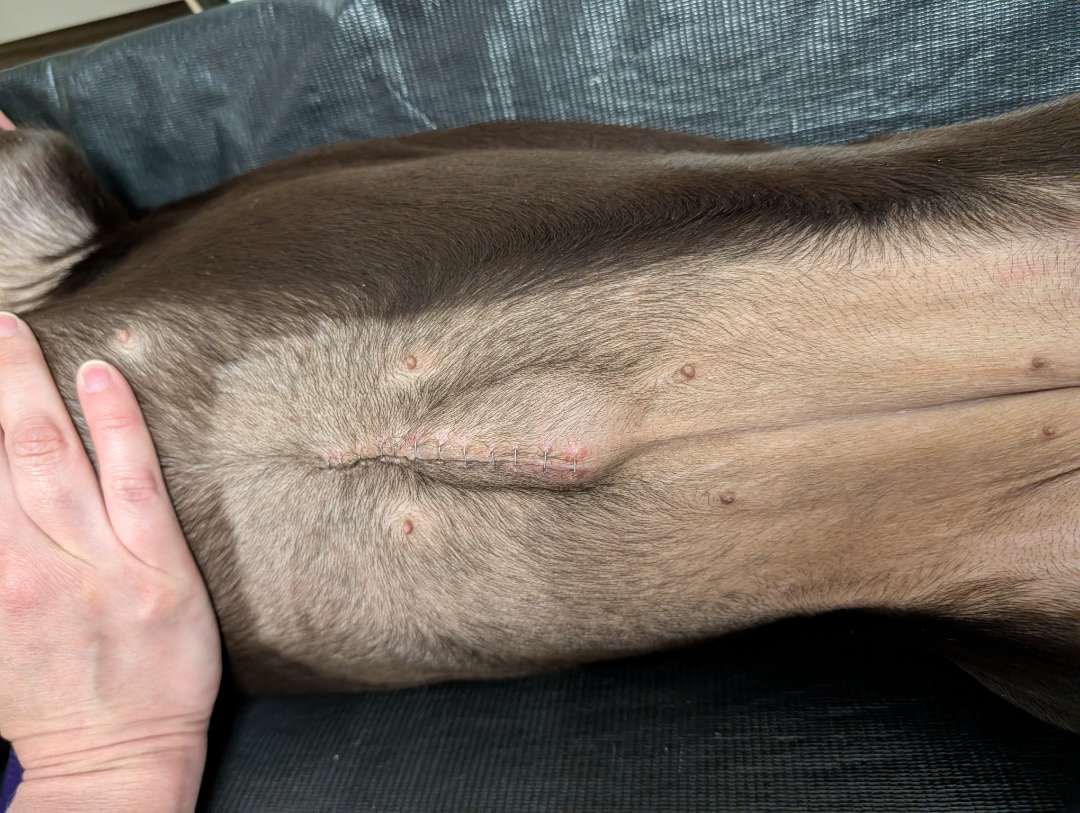
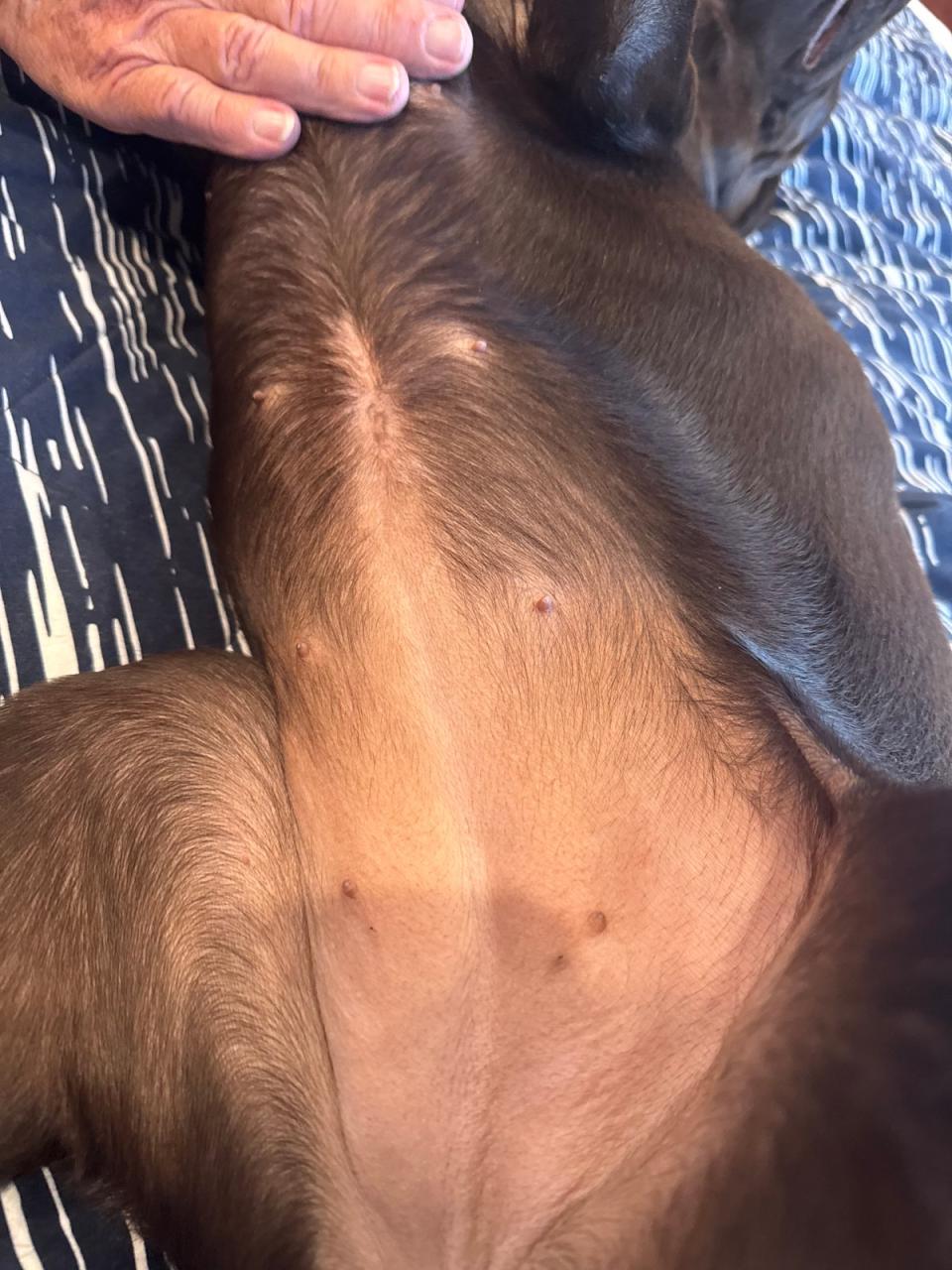
These photographs document one patient’s recovery over about three weeks after surgery. Healing time varies with the procedure and the individual pet, so this is not a deadline for every seroma to resolve. Continue your own pet’s restrictions until the surgical team says they can change.
Why your veterinarian may choose not to drain it
Draining the fluid sounds like the obvious fix, but the empty space beneath the skin may still be there. If so, the pocket can fill again. A needle or drain can also give bacteria a way into healing tissue. For a simple seroma, careful monitoring may be safer than removing the fluid.
The decision changes if the swelling is large, painful, persistent, or affecting the incision, or if your pet is not feeling well. Your veterinarian may recommend sampling the fluid, draining it, using compression, placing a drain, prescribing medication, or treating the area surgically. Never puncture, squeeze, or massage postoperative swelling at home.
When to watch, and when to call
May be appropriate to monitor after speaking with your veterinarian
- Soft or mildly firm swelling
- Incision edges remain closed
- Minimal redness and discomfort
- No odor or abnormal discharge
- Your pet otherwise seems comfortable
Call promptly
- Swelling is rapidly enlarging
- Increasing redness, warmth, or pain
- Active bleeding or substantial bruising
- Yellow, green, cloudy, or foul-smelling discharge
- The incision is gaping or separating
- Persistent licking or chewing
- Poor appetite, lethargy, vomiting, weakness, or a notable behavior change
Seek urgent or emergency guidance for uncontrolled bleeding, collapse, pale or blue-gray gums, difficulty breathing, severe weakness, marked pain, or tissue protruding through an open incision.
What to do when you notice swelling
- Take a clear photograph. Include the entire incision and use similar lighting and distance for comparison.
- Call the surgical team. Share when you first noticed the swelling, whether it is changing, and how your pet is acting.
- Return to strict recovery restrictions. Use controlled leash walks or a small indoor recovery area as directed.
- Prevent licking and chewing. Keep the prescribed e-collar or veterinarian-approved protection in place.
- Keep the incision clean and dry. Do not apply ointment, alcohol, peroxide, heat, ice, or a bandage unless instructed.
- Give medications exactly as prescribed. Do not add human medication or leftover pet medication.
Have these details ready when you call
- The surgery date and the procedure your pet had.
- When the lump appeared and whether it is changing.
- Any drainage, licking, unusual activity, or missed medication.
- Changes in appetite, energy, comfort, or vomiting.
- A current photo, if the clinic asks you to send one.
Ask when the team wants a recheck and which changes should trigger an earlier call. If they recommend monitoring, note their instructions so everyone caring for your pet follows the same plan.
Frequently Asked Questions
Is a seroma after pet surgery an emergency?
An uncomplicated seroma may not be an emergency, but owners cannot reliably identify the cause of postoperative swelling at home. Contact the surgical team for guidance. Rapid enlargement, significant pain, bleeding, abnormal discharge, an opening incision, weakness, pale gums, collapse, or breathing difficulty requires more urgent assessment.
How long does a seroma last in a dog or cat?
Many uncomplicated seromas improve gradually over several days to a few weeks, but there is no universal timeline. The procedure, location, amount of fluid, activity level, and individual healing response matter. Call if the swelling grows, changes, becomes painful, or is not improving as expected.
Can I drain or massage my pet’s seroma?
No. Do not puncture, squeeze, or massage postoperative swelling unless your veterinarian specifically instructs you. The pocket may refill, and manipulating or entering the area can damage healing tissue or introduce bacteria.
Can too much activity cause a seroma?
Movement between healing tissue layers can contribute to fluid accumulation. Follow the exact activity restrictions in your pet’s discharge instructions even when your pet feels energetic. Call the surgical team if keeping your pet quiet is becoming difficult.
How can I tell a seroma from an infection?
You cannot confirm the difference from appearance alone. Increasing redness, heat, pain, odor, cloudy or colored discharge, lethargy, poor appetite, or an opening incision are concerning changes. Contact your veterinarian rather than assuming a lump is a harmless seroma.
Should I use a warm compress on a seroma?
Ask the surgical team first. Some veterinary practices recommend warm compresses for selected seromas, but instructions differ with the incision and procedure. Do not start heat, ice, compression, or massage on your own. If a compress is recommended, ask how warm, how long, how often, and how to keep the incision dry. See VRCCO’s procedure-specific incision guidance.
Concerned about swelling after your pet’s surgery?
Contact the veterinary team that performed the procedure and follow their instructions. Cascade Veterinary Clinics clients can call (509) 663-0793. During open hours, call ahead for guidance. After hours, active Cascade patients begin with the same number and veterinary triage; do not arrive at a clinic unless instructed.
Sources
- Merck Veterinary Manual: Initial Wound Management in Small Animals.
- American College of Veterinary Surgeons: Postoperative Care After Surgery.
- Seattle Humane: Spay/Neuter Post-Operative Guide.
- Seattle Animal Shelter: Post-Surgery Instructions.
This article provides general education and does not replace your pet’s discharge instructions, examination, diagnosis, or treatment plan.