When should my pet get a dental cleaning?
Timing depends on your pet's age, genetics, home-care routine, and what we see on exam. We'll recommend a plan based on the grade of disease and dental X-ray findings.

Dentistry • Pets
Dentistry is about comfort, health, and prevention—not just clean teeth. We focus on a complete dental workup that supports your pet's whole-body health.
What dental disease looks like, what's included in a professional dental, and why X-rays + monitoring make this a true medical procedure.
Dental grading (1–4)
Treating earlier stages often reduces discomfort and prevents more advanced disease.
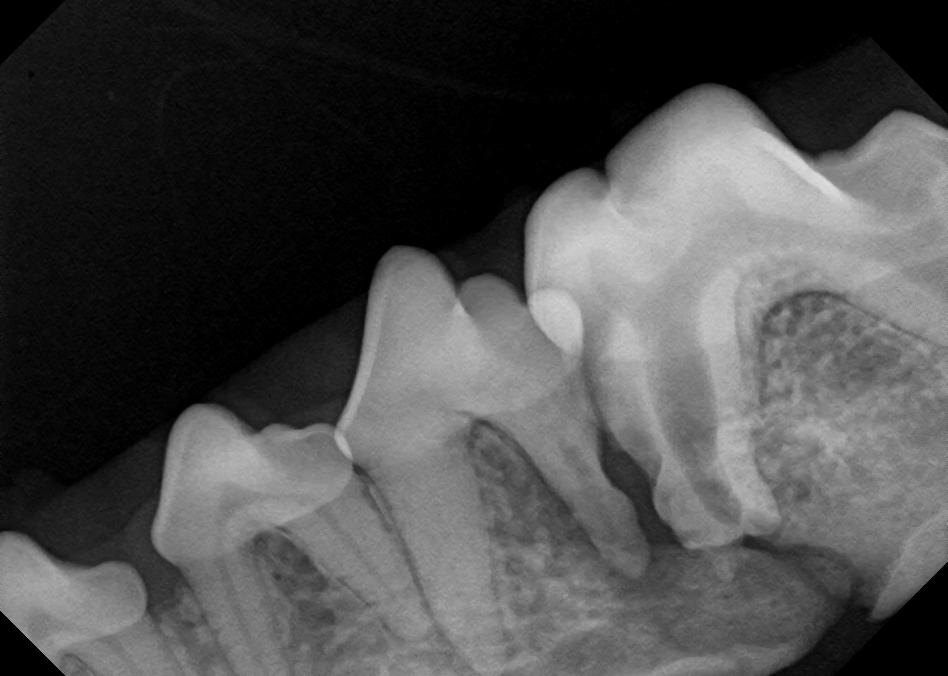
Below the gumline matters
Dental disease often starts below the gumline—what you see on the surface is only part of the story.
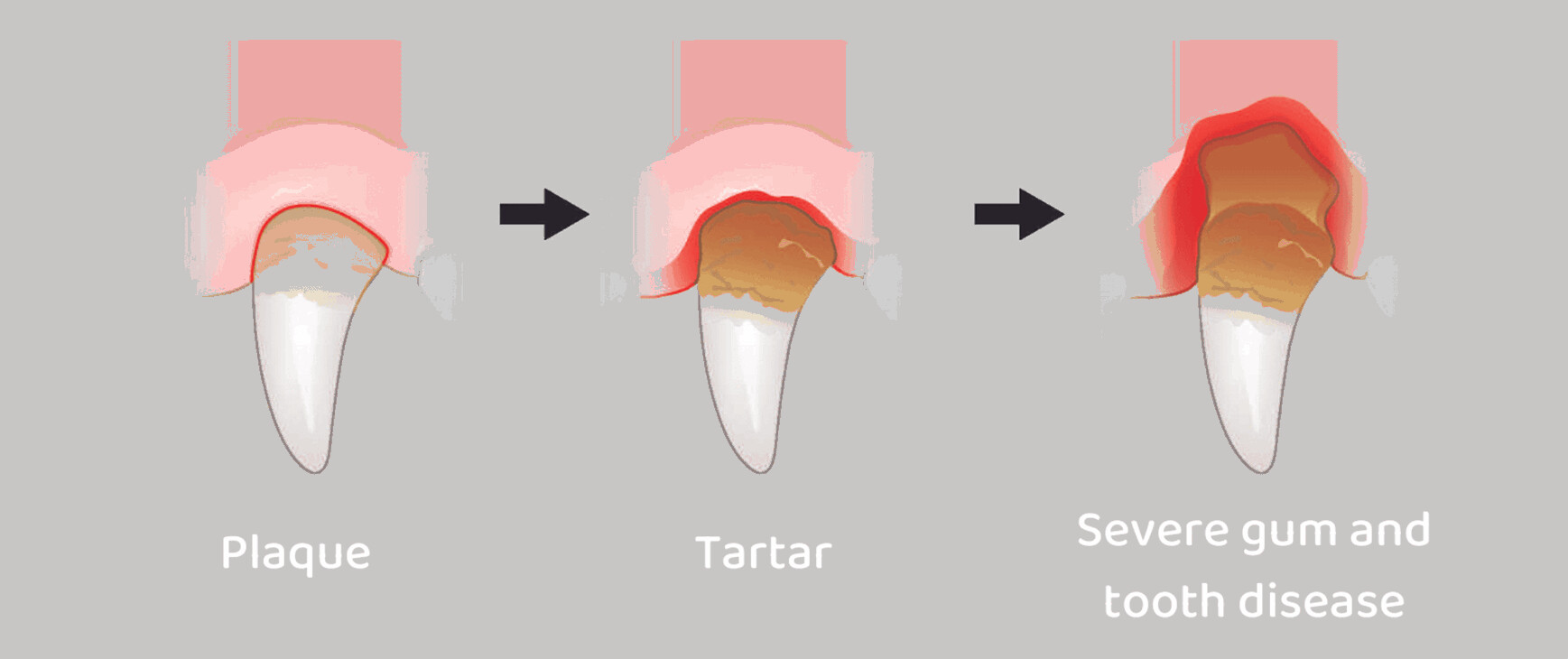
Dental disease is one of the most common health conditions in pets. Plaque hardens into tartar, irritates the gums, and can lead to infection, pain, and tooth loss—often progressing quietly below the gumline.
Every dental is customized to your pet's needs, with safety and comfort as our priority.
Want a clear plan?
Start with an exam—then we'll discuss timing, options, and next steps.
Dental disease progresses over time. Treating earlier stages often reduces discomfort and prevents more advanced disease.
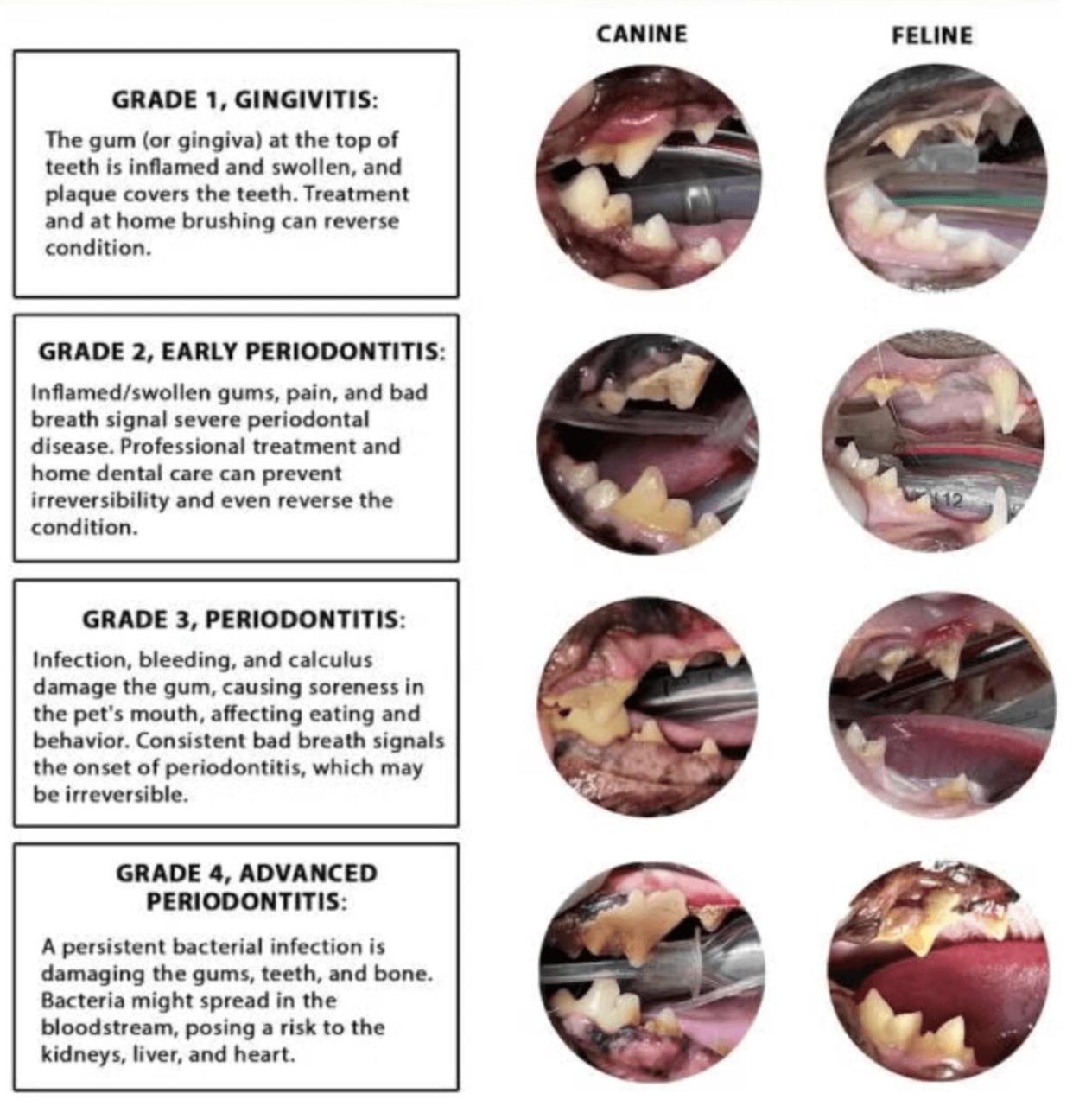


Important: some pets show minimal surface buildup while still having advanced disease below the gumline.
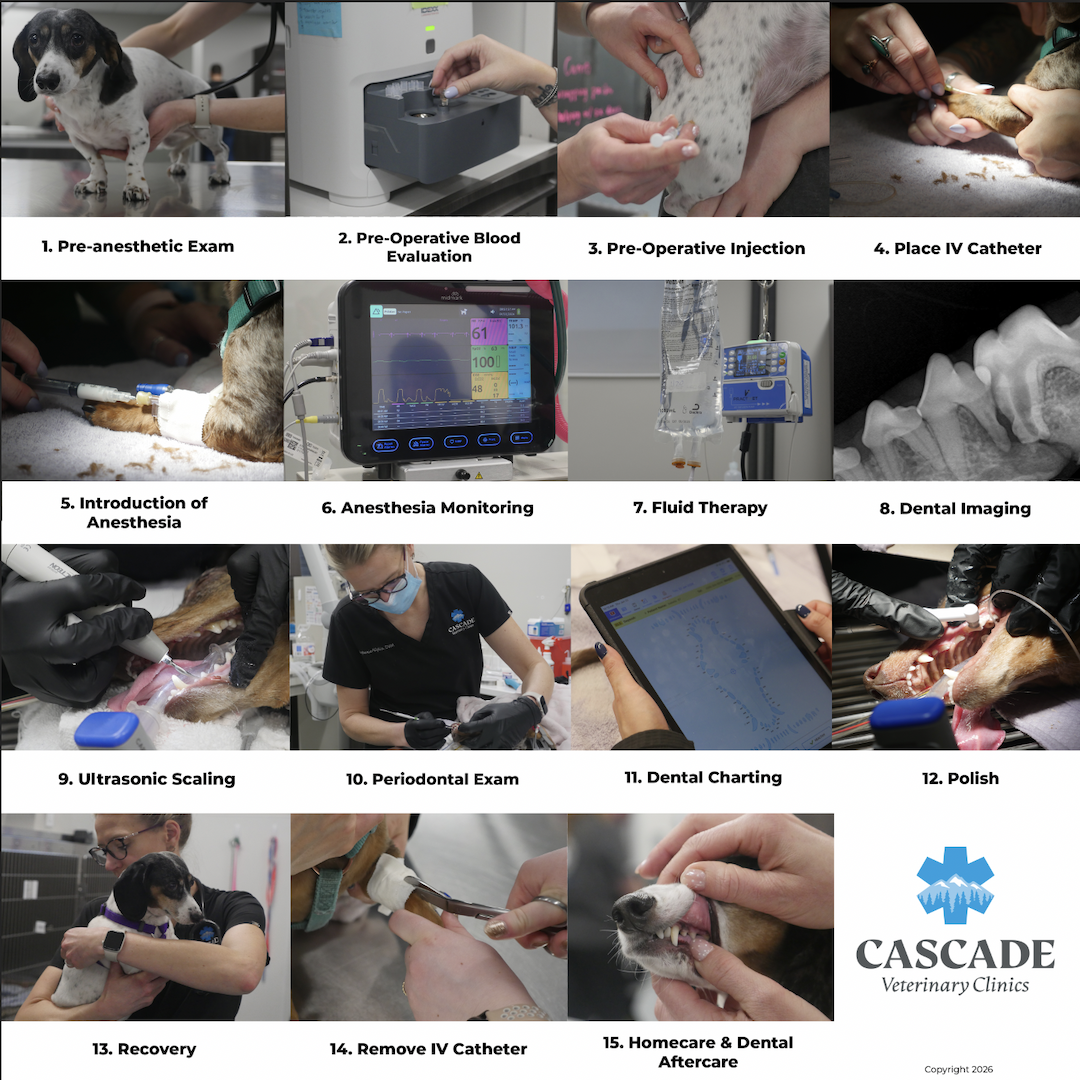
The collage image represents the full flow of a normal dental visit. From safety checks and anesthesia support to X-rays, thorough cleaning, and treatment decisions—there are many steps involved to keep your pet safe and comfortable.
It's more than a cleaning.
It's diagnostics, safety, treatment, and recovery—built around your pet.
Ask our team about VOHC-accepted options and what fits your pet's age, breed, and lifestyle.
We're here to help you understand options and choose the right next step.
Timing depends on your pet's age, genetics, home-care routine, and what we see on exam. We'll recommend a plan based on the grade of disease and dental X-ray findings.
Dental disease often lives below the gumline. X-rays help us evaluate tooth roots and bone, identify hidden infections, and guide the best treatment decisions (including whether extractions are needed).
We tailor anesthesia to your pet's health status and needs, and we closely monitor throughout the procedure and recovery. Pre-anesthetic screening may be recommended to help us plan safely.
Yes. If we identify concerns on exam or X-rays, we'll discuss recommendations so you can make informed decisions about treatment and next steps.
Most dentals are day-stay procedures. Timing varies based on findings and whether extractions or additional treatments are needed.