
Dog Services · Wenatchee
Talk with our Wenatchee team about whether laser therapy belongs in your dog’s care plan.
Your dog takes longer to get up, turns back sooner on a familiar walk, or hesitates before getting into the car. If movement has become harder, the first question is what is causing the change and which parts of a care plan could make daily life more comfortable.
Laser therapy is one option your veterinarian may consider after assessing the problem. Cascade offers dog laser therapy at the Wenatchee clinic. A useful conversation starts with your dog’s diagnosis, the activities that matter to them, and how you will review the response.
What therapeutic laser treatment involves
A therapeutic laser delivers light to a selected area from outside the body. The treatment does not require an incision. You may hear it called red light therapy, cold laser therapy, or photobiomodulation, often shortened to PBM.
These terms cover different equipment and treatment approaches. The light settings, area being treated, and reason for treatment matter. Your veterinarian can explain what they are proposing for your dog and how it fits with the care already in place.
Start with a diagnosis and a practical goal
Stiffness or a change in gait does not identify the cause on its own. An examination helps your veterinarian decide whether the concern involves a joint, muscle, nerve, injury, or another problem. Testing or imaging may be recommended when it would help guide the plan.
For a dog with osteoarthritis, care can involve veterinary pain treatment, body condition, suitable movement, and changes such as better footing at home. Laser may be discussed as an additional option. It does not remove the need to address the underlying condition.
Choose a goal that can be observed safely, such as getting up from a usual resting place or completing a comfortable, familiar walk. A consistent record gives you and your veterinarian more useful information than judging a single good or bad day.
What the research can tell us
Some small studies of dogs with hip or elbow osteoarthritis have reported improvements in pain or function with photobiomodulation. That is encouraging, but it does not mean every dog will improve or that all treatment devices and schedules are equivalent.
Results after surgery have also varied. One controlled study after knee surgery found no benefit in pain or hindlimb function from the protocol tested. A broader systematic review found conflicting findings and important limitations in the available laser research.
Ask how the evidence relates to your dog’s condition. A reasonable plan includes a specific goal, an agreed review point, and a discussion about what to do if there is little change.
Watch the video
See red light therapy at Cascade
Watch Cascade’s 40-second video for a closer look at red light therapy.
Watch on TikTok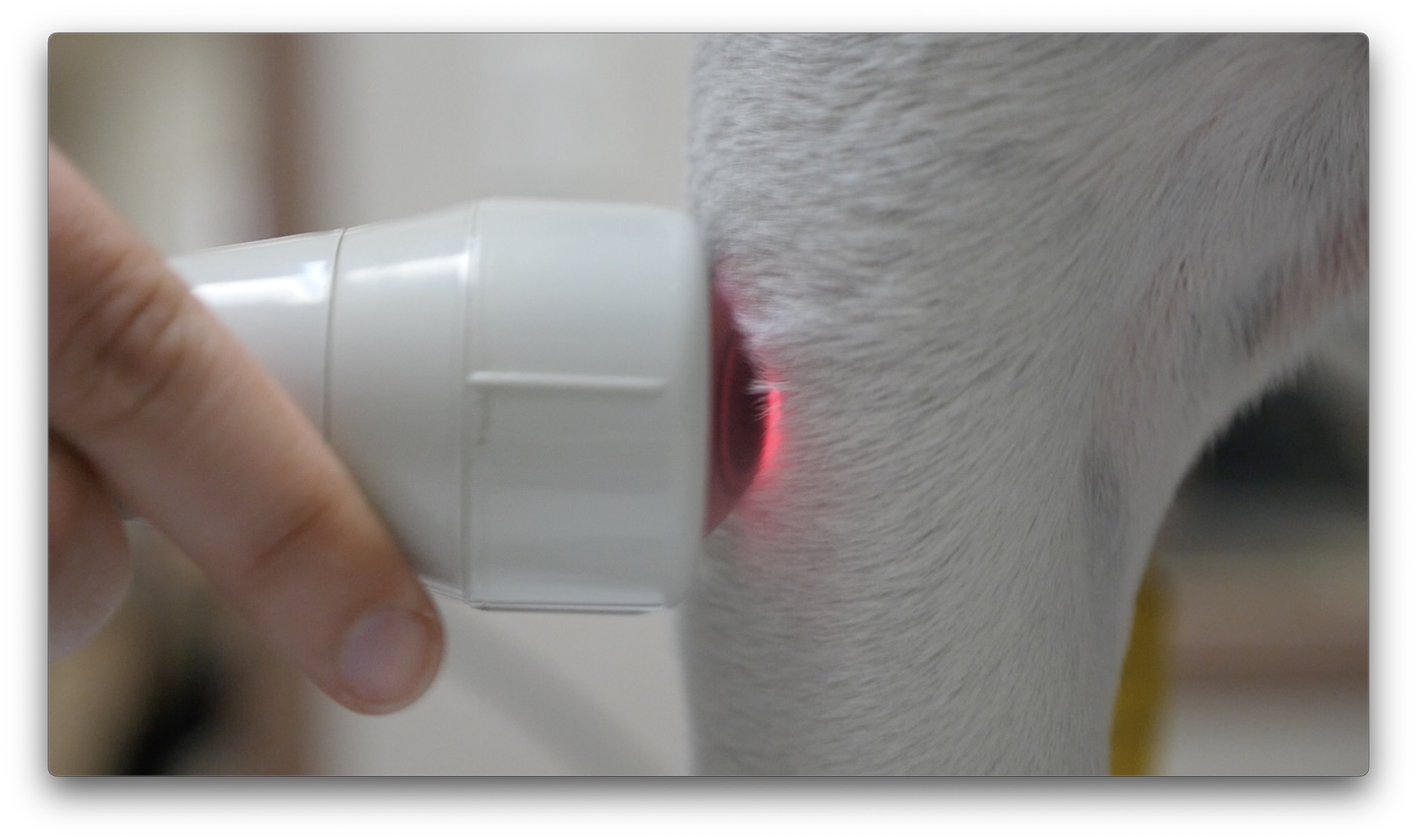
Laser therapy during recovery
Light-based treatments have been studied around surgical incisions and other wounds. A preliminary study in dogs and cats assessed early changes in surgical wounds. These findings do not establish that laser therapy makes every wound heal faster.
If your dog has a wound or has recently had surgery, ask the treating veterinarian whether any additional therapy is appropriate. Follow the instructions for incision checks, activity, medication, and rechecks. Decisions about adding laser should remain part of that coordinated recovery plan.
What to expect at a dog laser therapy session
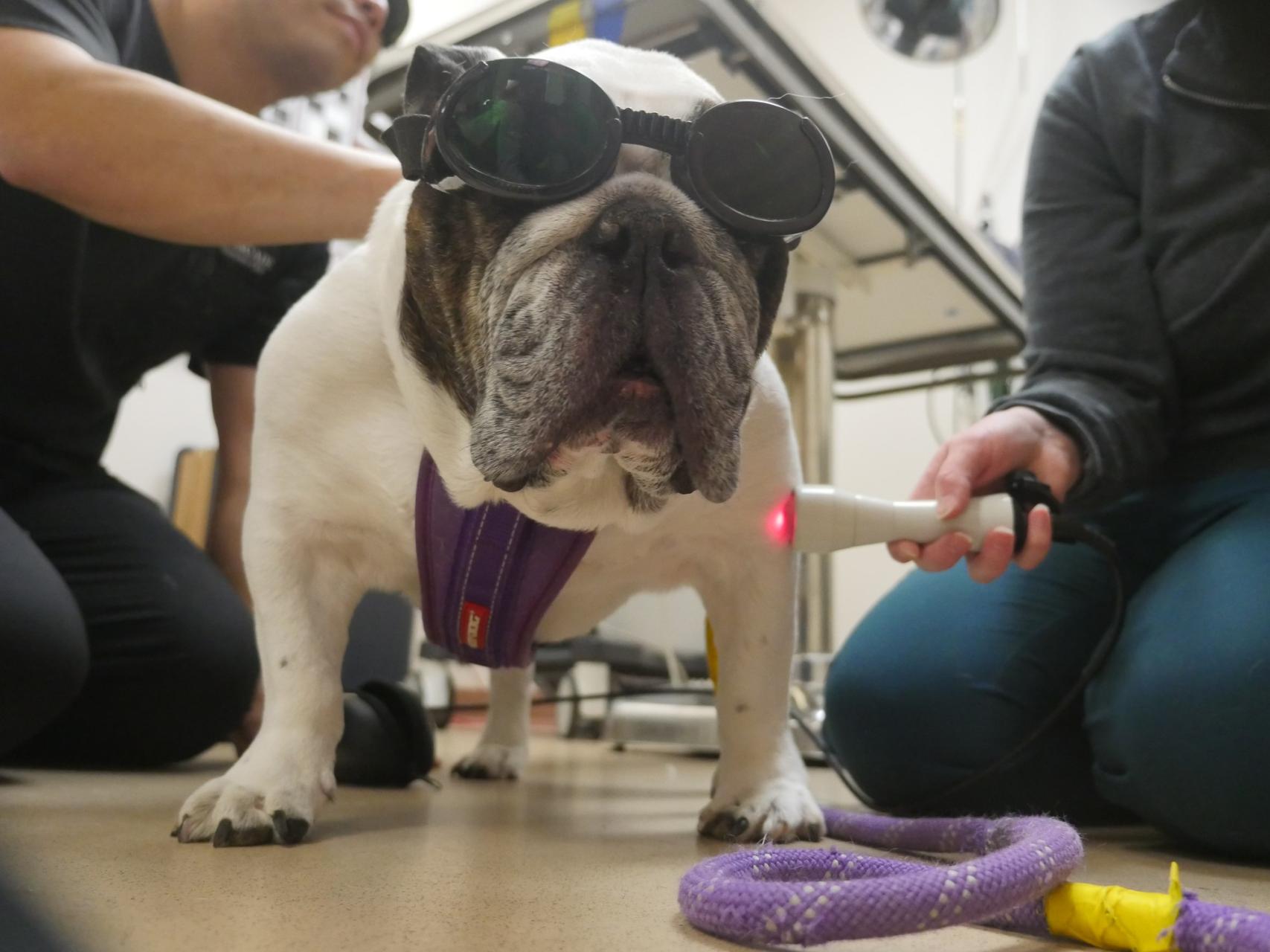
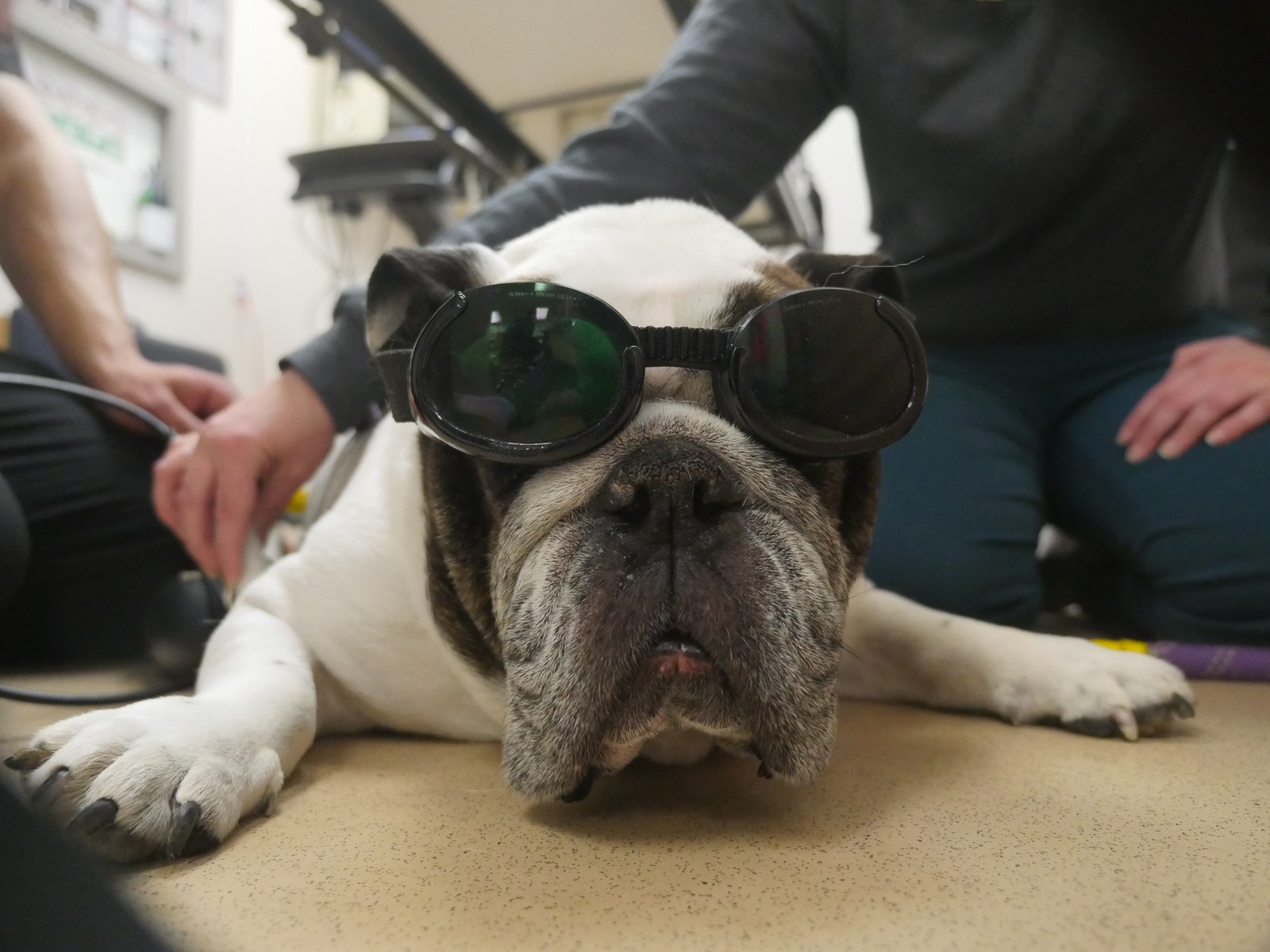
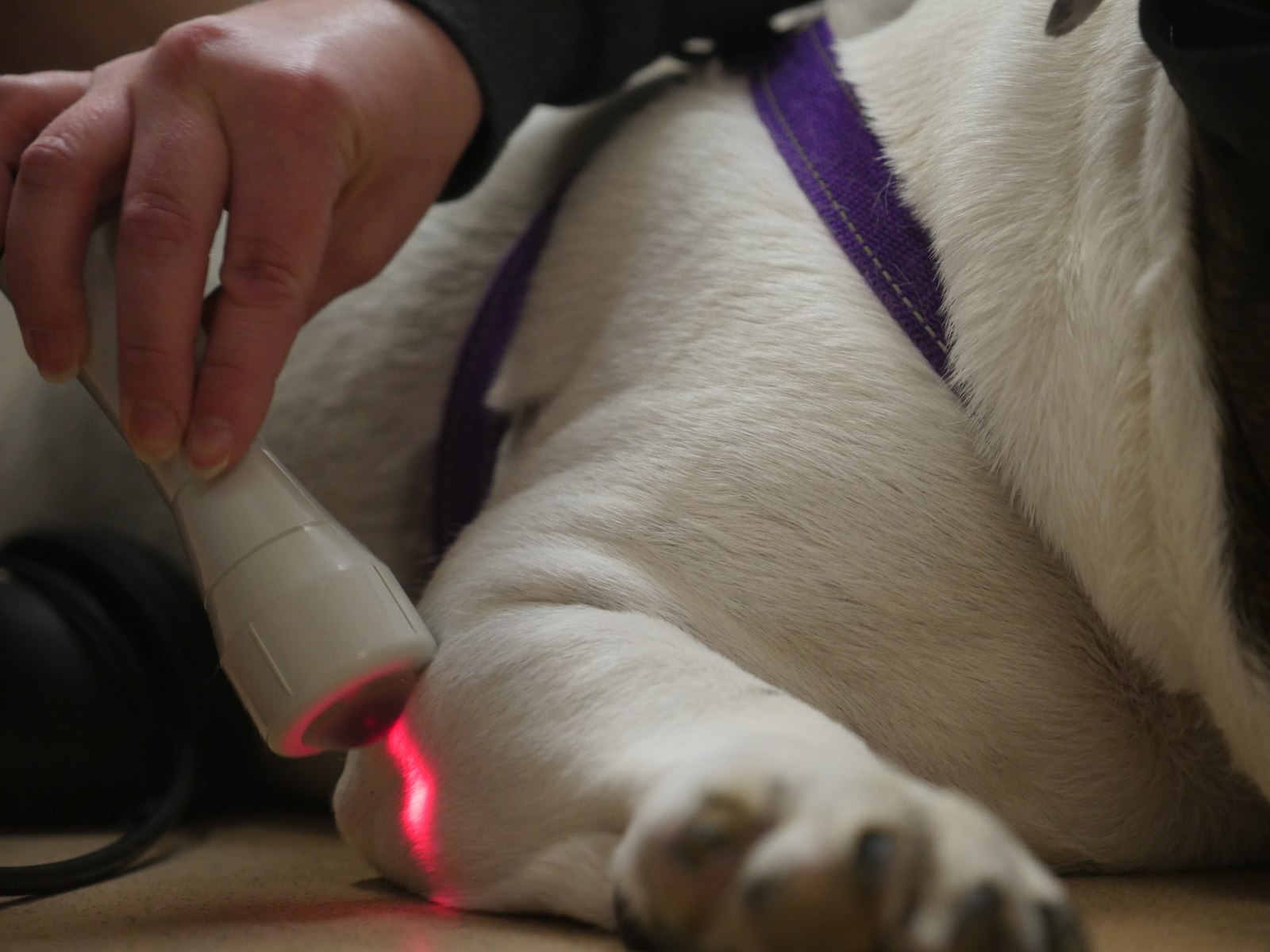
During a therapeutic laser session, the team directs light from a handheld device at the selected area while monitoring your dog. The treatment does not involve an incision. Ask how your dog will be supported, how protective eyewear will be used, and how long to allow for the visit.
Laser treatment needs appropriate equipment and technique. Improper exposure can injure eyes or overheat tissue. Tell the veterinarian about your dog’s health conditions, any new lump or skin change, recent procedures, and all medications or supplements before treatment is planned.
If your dog is worried about handling, struggles to stay in one position, or finds travel difficult, mention that when arranging the visit. A plan needs to work for the individual dog as well as the condition being treated.
Bring the details that help guide treatment
A few observations can make the appointment more useful.
- When the change began and whether it is getting better, worse, or varies with activity.
- A short video of your dog moving naturally, recorded without pushing them to perform a painful task.
- A current medication and supplement list, including what seems to help and any concerns.
- Recent records, imaging reports, or discharge instructions if care was provided elsewhere.
- Your questions about appointment frequency, cost, and when the plan will be reassessed.
If laser therapy is recommended, agree on what to track between visits. Let the team know about worsening discomfort or new signs rather than waiting until a treatment series ends. Changes to prescribed medication or recovery restrictions should be discussed with the treating veterinarian.
Dog Laser Therapy FAQs
Where does Cascade offer dog laser therapy, and how do I arrange a visit?
Dog laser therapy is offered at Cascade’s Wenatchee clinic. Contact the team to discuss the appropriate next appointment. The online Request an Appointment form is for routine wellness visits for established clients, so contact Wenatchee directly about laser therapy.
What is photobiomodulation for dogs?
Photobiomodulation describes the effects of therapeutic light on tissue. In a laser therapy session, light is directed at a chosen area externally. The treatment approach depends on the condition, equipment, and veterinary plan.
Can laser therapy help a dog with arthritis?
It may be considered as an addition to an individual arthritis plan. Some small canine studies report improvements, but findings and treatment protocols vary. Your veterinarian can discuss the likely value for your dog and how to assess the response.
Can laser therapy replace my dog’s pain medication?
Do not stop or reduce prescribed medication on your own. Laser is generally considered alongside other care, and any medication changes depend on the diagnosis, your dog’s response, and the treating veterinarian’s assessment.
How many laser sessions will my dog need?
There is no single schedule for every condition. Ask about the proposed frequency, expected commitment, and review point before beginning. The plan should be reassessed if your dog is not progressing as hoped.
Is laser therapy safe for every dog?
Suitability needs an individual assessment. The veterinarian should review your dog’s health history and medications, and explain eye protection and comfort monitoring. Incorrect laser use can cause eye or skin injury, so treatment requires appropriate safety precautions.
Will laser therapy make a surgical incision heal faster?
That cannot be promised. Research has examined selected wound-healing measures, but results do not establish faster healing for every procedure or dog. Ask the treating veterinarian whether there is a reason to include laser in your dog’s recovery plan.
Is laser therapy painful for dogs?
Treatment is intended to be comfortable, but a painless experience cannot be promised for every dog. Some devices can produce a feeling of warmth. Tell the team if your dog seems uncomfortable so they can reassess treatment and positioning. Correct technique and eye protection remain essential.
Ask about laser therapy in Wenatchee
Contact our Wenatchee team to discuss your dog’s needs and the right appointment. Bring your observations and questions so the next step fits your dog’s care plan.
Sources and further reading
- AAHA, Chronic Pain Assessment in Dogs
- AAHA, Nonpharmacologic Modalities for Pain Management
- Millis and Bergh, A Systematic Literature Review of Complementary and Alternative Veterinary Medicine: Laser Therapy
- Alves and colleagues, A randomized double-blinded controlled trial on the effects of photobiomodulation therapy in dogs with osteoarthritis
- Kennedy and colleagues, Effects of low-level laser therapy on bone healing and signs of pain in dogs following TPLO
- The Effect of a Class IV Therapeutic LASER on Post-Surgical Wound Healing Processes in Canis familiaris and Felis catus: A Preliminary Study
- AAHA, Veterinary Laser Therapy for Pets: Uses, Benefits & Safety