Surgery • Orthopedic
FHO Surgery for Dogs & Cats
If your small to medium-sized dog or cat struggles with severe hip pain, limps chronically, or can no longer enjoy normal activity, FHO surgery can be life-changing. We remove the painful femoral head to eliminate bone-on-bone grinding and allow your pet to move comfortably again.

X-ray showing normal hip (left) vs. hip dysplasia (right).
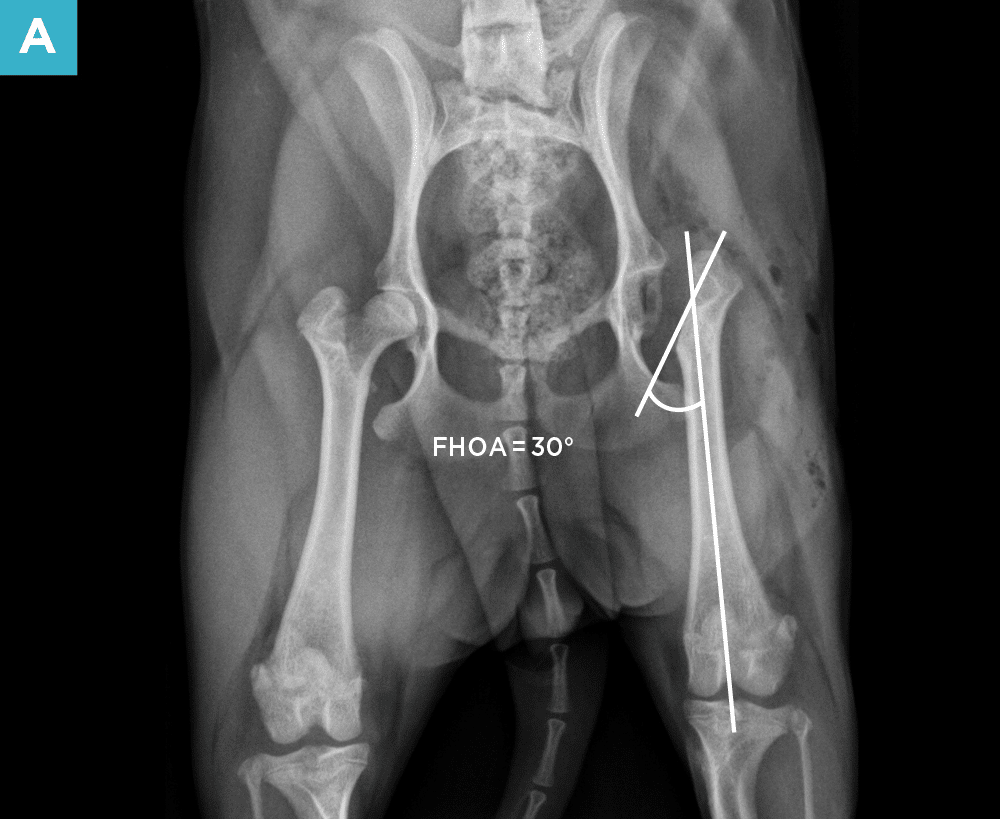
Illustration of the femoral head ostectomy procedure.
What Is FHO Surgery?
FHO surgery involves removing the femoral head and neck (the "ball" of the ball-and-socket hip joint). Over time, strong scar tissue forms a functional false joint, eliminating painful bone-on-bone contact. This procedure is particularly effective in cats and small to medium-sized dogs (typically under 50 lbs), though larger dogs can also benefit with dedicated rehabilitation.
Important: Sudden severe limping, non-weight-bearing lameness, or signs of intense pain require immediate veterinary evaluation.
Common Conditions Treated with FHO
- Hip dysplasia
- Legg-Calvé-Perthes disease (avascular necrosis of the femoral head)
- Hip luxation (dislocation)
- Femoral head or neck fractures
- Severe osteoarthritis unresponsive to medical management
- Traumatic injuries to the hip joint
Common Signs That FHO May Be Needed
- Chronic hind limb limping or lameness
- Difficulty standing up, jumping, or climbing stairs
- Muscle wasting (atrophy) in the affected leg
- Pain when the hip is extended or touched
- Reluctance to exercise or play
- Toe-touching or complete non-weight-bearing on the leg
What FHO Surgery Includes
The procedure is customized to your pet and generally includes:
- Surgical excision of the femoral head and neck
- Smoothing of bone edges to prevent irritation
- Comprehensive, multi-modal post-operative pain management
- Detailed rehabilitation and physical therapy guidance
Important: Success depends heavily on early intervention and committed post-operative physical therapy.

Physical therapy exercises are essential for optimal recovery after FHO surgery.
Recovery & Aftercare
- Most pets go home 1–3 days after surgery
- Strict crate rest and limited activity for the first 2–4 weeks
- Controlled leash walks and passive range-of-motion exercises starting early
- Gradual increase in activity with physical therapy around weeks 4–6
- Full functional recovery typically in 3–6 months, with many pets returning to near-normal activity
Why Choose Us for FHO Surgery?
- Experienced orthopedic surgeons
- Advanced pain control and monitoring
- Personalized rehabilitation plans
- Compassionate, comprehensive care
Concerned About Your Pet’s Hip Pain?
