
Dog Services · Cascade Veterinary Clinics
Discuss the procedure, timing, and recovery plan that fit your dog.
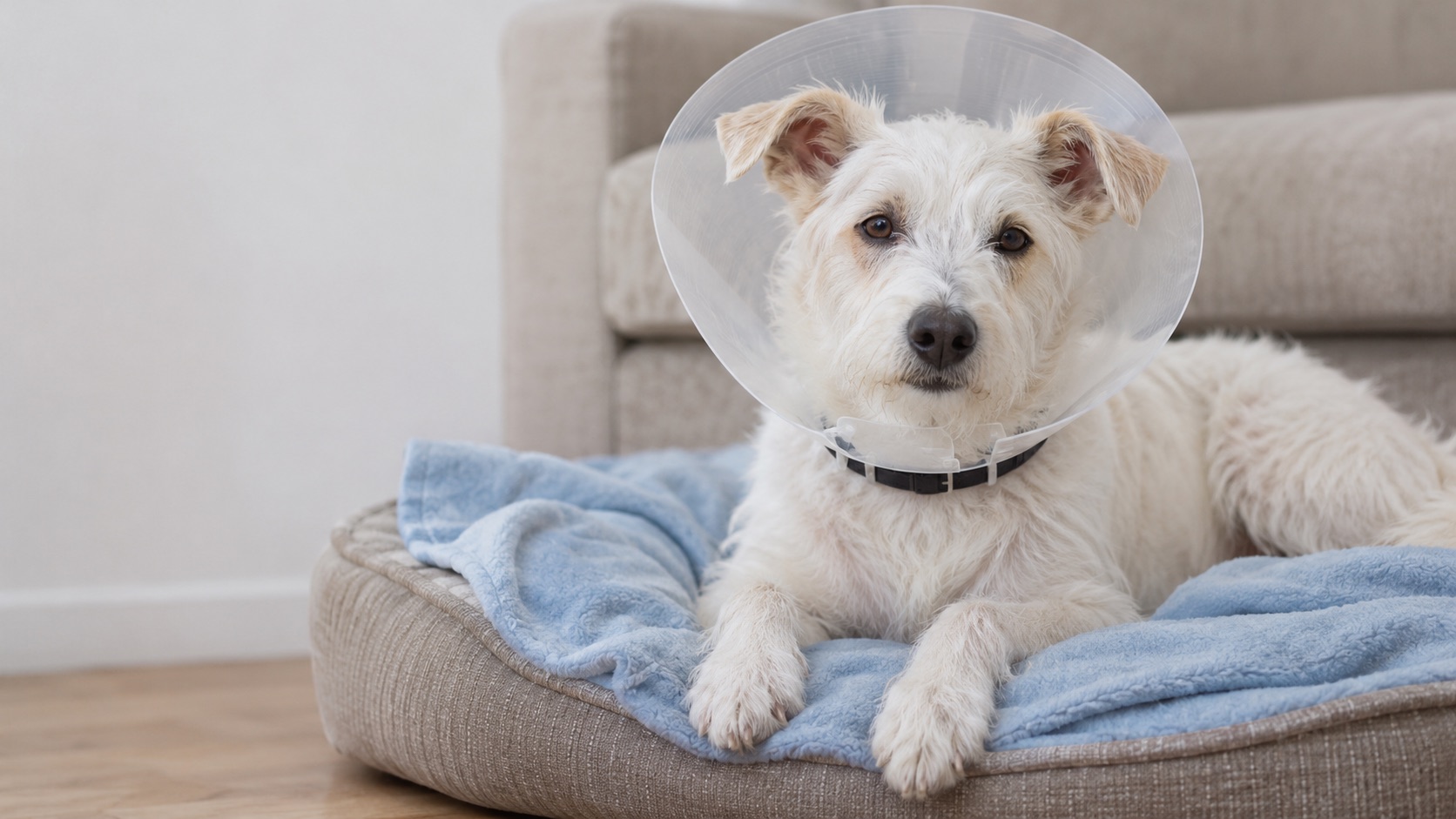
Choosing a spay or neuter date starts with a conversation about your dog. Age matters, but so do expected adult size, sex, health, reproductive history, and life at home. A general recommendation cannot settle every dog's decision.
Talk with your Cascade veterinarian about the options, their benefits and risks, and how to prepare. You should understand the planned procedure and the recovery it requires before choosing a date.
Understand which procedure is being discussed
A spay usually removes the ovaries, with or without the uterus, from a female dog. Removing the ovaries stops heat cycles and prevents pregnancy. In a typical male neuter, also called castration, both testicles are removed.
The approach is not identical for every dog. Reproductive history, anatomy, health findings, and the reason for surgery may change the plan. Ask the veterinarian to explain what will be removed, why that approach is recommended, and whether any finding could change the procedure.
When to spay or neuter your dog
There is no single best age for every dog. Your veterinarian considers breed or expected adult size, growth, sex, health, and the balance of potential benefits and risks. Research findings do not affect every breed or individual in the same way.
Tell the team about heat cycles, possible pregnancy, previous breeding, and your plans for the dog. If surgery is deferred, ask how to prevent unintended breeding while you wait. Make the decision with current clinical advice rather than a date chosen from a general online chart.
Benefits and risks of spaying and neutering
Spaying or neutering prevents unwanted litters and changes the effects of reproductive hormones. It can prevent or reduce certain reproductive-health problems, while other health risks may vary with sex, breed, and timing. Ask which considerations matter most for your dog.
These procedures require anesthesia and involve surgical risks, including bleeding, infection, and recovery complications. Individual assessment and planning help manage risk; they cannot make it zero. Discuss any previous anesthetic difficulty or health change before the procedure.
Prepare for the preoperative discussion
A physical examination and review of the medical history help guide the anesthetic and surgical plan. Testing may be recommended based on the dog and procedure. Bring a current list of medications and supplements, previous records, and any history of unusual reactions.
Ask about fasting, which medications to give, drop-off and discharge arrangements, pain management, and who to contact with concerns. Follow the clinic's instructions for your dog. Do not stop medicines or use a generic fasting schedule without checking with the team.
Ask whether laparoscopic spay is an option
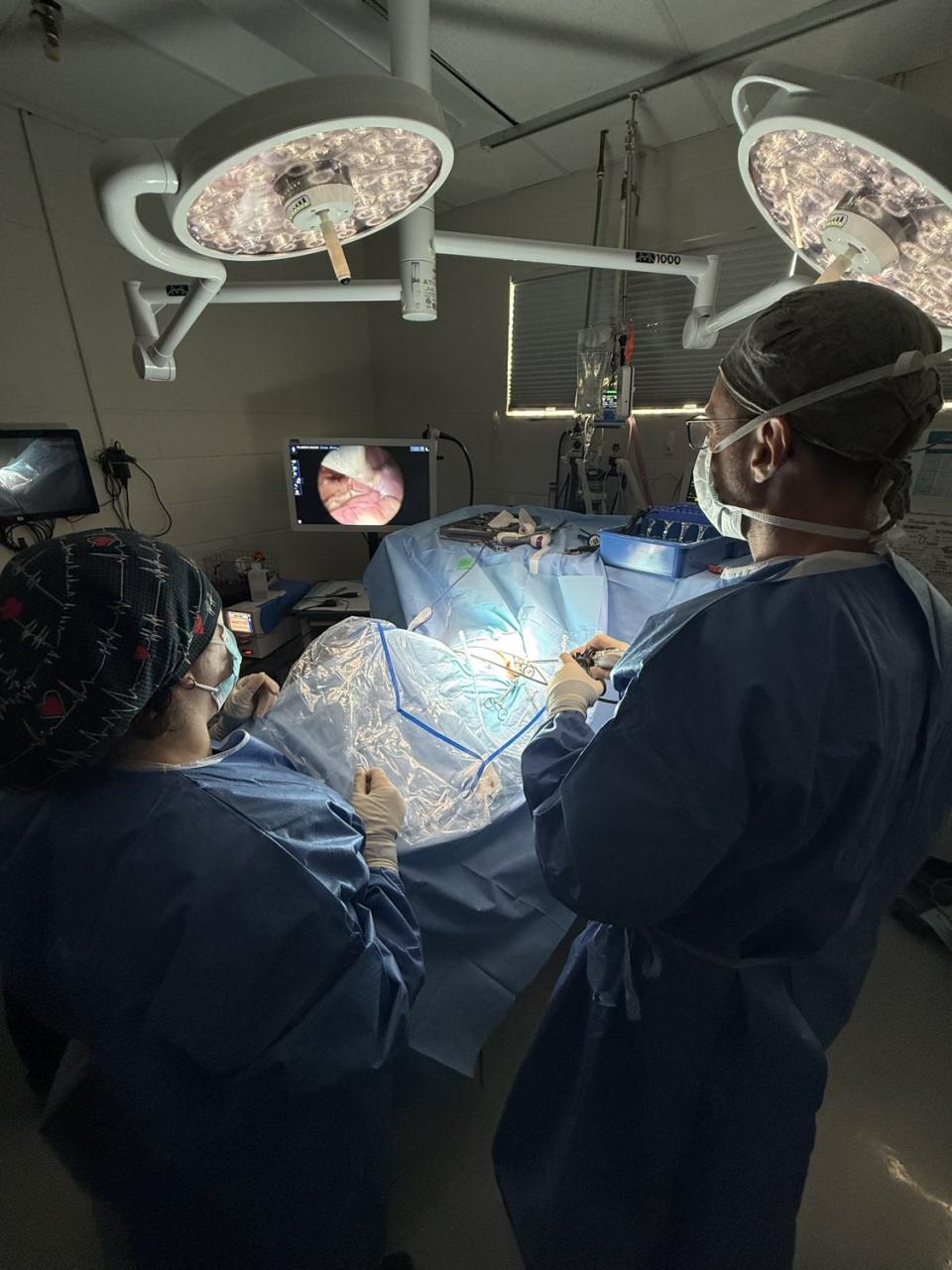
Cascade has an existing laparoscopic spay service page for dogs. A laparoscopic ovariectomy uses a camera and instruments through small abdominal openings to remove the ovaries. It still requires general anesthesia and careful patient selection.
Laparoscopy is not automatically the safest or best approach for every dog. Health, anatomy, reproductive history, previous surgery, and possible uterine disease can affect the recommendation. Read the dedicated page and ask whether it fits your dog; the final plan may require a different approach.
Plan for recovery before surgery
Arrange a quiet place to rest and a way to limit running, jumping, and rough play as directed. Ask how to manage toileting, stairs, other pets, and normal household routines during the restricted period.
Follow discharge instructions for pain medication, feeding, incision checks, protective devices, and rechecks. Prevent licking or chewing at the incision, and do not add creams or other products unless instructed. A dog who seems lively may still need protection while tissues heal.
Keep the team involved if recovery changes
Look at the incision and your dog's comfort, appetite, and activity as instructed. Contact the clinic about worsening pain, an opening incision, increasing swelling or discharge, or recovery that does not match the guidance you received.
Ask when normal activity can resume and whether an incision check or suture removal is needed. Recovery length depends on the procedure and the individual dog. Do not end restrictions simply because the incision looks small or your dog wants to play.
Questions worth bringing to the visit
Use the discussion to leave with a plan you can carry out at home.
- How do my dog's growth, breed, health, and reproductive history affect timing?
- Which procedure and approach are recommended, and why?
- What evaluation or tests are advised before anesthesia?
- What are the fasting and medication instructions for this dog?
- How will comfort, activity restriction, incision protection, and follow-up be managed?
- What should I do if something changes before surgery or during recovery?
Dog Spay & Neuter FAQs
What is the best age to spay or neuter my dog?
There is no one age for every dog. Discuss sex, expected adult size, growth, health, reproductive history, and individual risks with your veterinarian. A recommendation for another dog may not fit yours.
Is laparoscopic spay better than an open spay?
Neither approach is best for every patient. Laparoscopy uses smaller access points but still requires general anesthesia and carries surgical risks. Your veterinarian can assess suitability and explain the recommended option.
Will neutering fix a behavior problem?
It may reduce some mating-related behaviors, but it is not a guaranteed treatment for every behavior concern. Describe the specific problem so your veterinarian can consider health, learning, environment, and appropriate behavior support separately.
Can an adult or older dog be considered for surgery?
Yes, evaluation can be appropriate beyond puppyhood. Health, the reason for surgery, and individual anesthetic risk matter. An examination and any recommended testing help the veterinarian decide whether and how to proceed.
Should I withhold food and regular medicines before surgery?
Follow the instructions issued for your dog. Fasting and medication plans vary with the patient and procedure. Contact the clinic if instructions are unclear or something was given differently; do not guess or hide a change.
How long will recovery take?
The answer depends on the procedure, findings, and healing. Follow the individual activity and incision-care instructions and keep recommended rechecks. Feeling energetic does not mean the tissues are ready for unrestricted play.
What if my dog can reach the incision?
Contact the clinic for advice about a suitable protective device or an adjustment to the plan. Licking and chewing can disrupt healing. Use the recommended protection as directed rather than waiting for damage to appear.
Discuss the right plan for your dog
Contact your Cascade clinic to review timing, surgical options, and the next evaluation step. A routine appointment request starts the conversation; it does not confirm a surgery date.