
Your cat has started avoiding the litter box, hiding when you come home, or biting during petting that used to be welcome. It can be hard to know whether something hurts, something feels threatening, or a familiar routine no longer works for them.
Start with what has changed. A behavior concern deserves attention even when your cat still eats, plays, or looks healthy. Bring it to your Cascade veterinarian so health concerns and what happens at home can be considered together.
Look at health and behavior together
Pain, bladder or digestive problems, itchy skin, and other illnesses can change how a cat acts. A cat who avoids jumping may be uncomfortable. A cat who avoids the litter box may find toileting painful or the box difficult to reach. Stress and illness can also occur together.
That is why a change should not automatically be labeled stubbornness, jealousy, or “just getting old.” The pattern helps guide an examination and any testing your veterinarian recommends.
Common cat behavior concerns
Litter box changes and spraying
Urinating or passing stool outside the box can involve health problems, litter preferences, access, or tension at home. Spraying and ordinary toileting are different patterns. Note where it happens and what you see.
Fear, hiding, or avoiding company
Hiding gives cats a way to feel safe. More hiding than usual, withdrawal, or difficulty reaching food or water deserves attention. Tell us about visitors, noise, new pets, and other changes.
Biting, swatting, or conflict between cats
Fear, pain, play, unwanted contact, and tension can look different but all need context. Avoid reaching between fighting cats or picking up an upset cat. Ask for help planning safe separation.
Scratching furniture
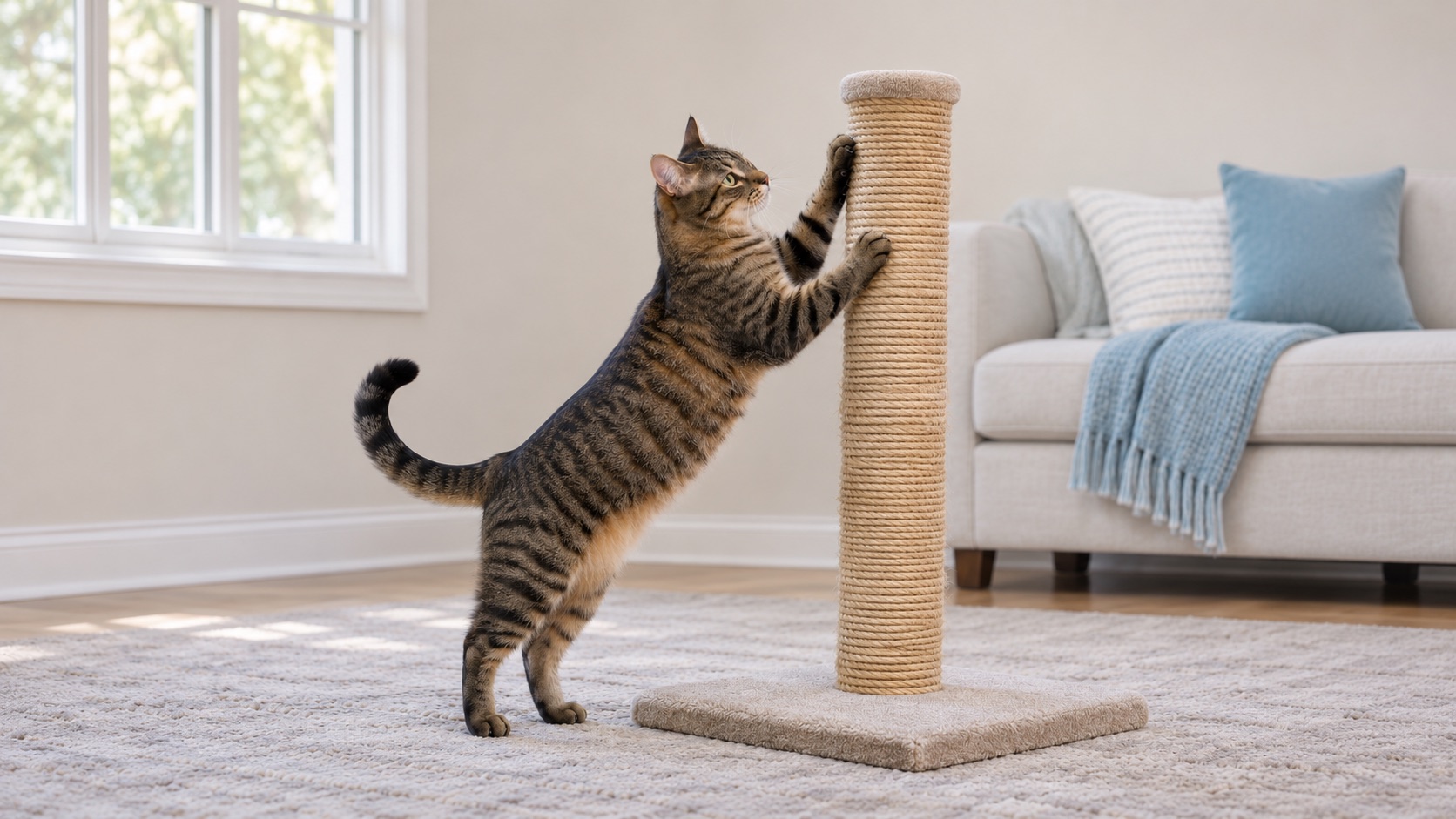
Scratching is a normal need, not a behavior to eliminate. The goal is to provide appealing scratching surfaces in useful locations and reward your cat for choosing them.
Overgrooming or fur loss
Licking that leaves thin fur, bald areas, or damaged skin needs a veterinary assessment. Itch and pain must be considered before assuming the cause is anxiety.
More meowing or changes at night
New vocalization, restlessness, or confusion can reflect health changes, particularly in older cats. Record when it happens and whether appetite, thirst, sleep, or movement has changed too.
What a veterinary visit can involve
Your observations matter because the clinic may not be where the behavior occurs. Describe what happens before, during, and after an episode, how often it occurs, and how it affects your cat or household.
A physical examination comes first, with tests selected for the signs and history. Depending on the concern, your veterinarian may discuss urine testing, bloodwork, or other diagnostics. Reviewing feeding areas, litter boxes, resting places, and relationships between pets can help identify practical changes.
The next steps should fit the individual cat. They may include treating a medical problem, adjusting the environment, teaching alternative behaviors, and planning follow-up to review progress.
Build a home that supports normal cat behavior
Changes work best when they meet your cat’s needs and allow choices. Start with a few manageable adjustments and review the response with your veterinarian.
- Offer safe retreat. Provide quiet hiding places and accessible resting spots. Let your cat choose when to approach rather than pulling them out or forcing contact.
- Spread out important resources. Place food, water, litter boxes, scratchers, and resting options in separate, accessible locations. In homes with several cats, one cat should not have to pass another to reach everything they need.
- Make scratching and play worthwhile. Offer sturdy vertical and horizontal scratchers to discover your cat’s preference. Provide suitable toys and opportunities to play, explore, and use food puzzles when appropriate for their diet and mobility.
- Reward the behavior you want. Follow a useful choice, such as using a scratcher, with a reward your cat enjoys. Keep learning sessions brief and comfortable. Yelling, spraying water, or frightening a cat can increase fear and worsen problems.
If a change increases fear or conflict, stop and ask for guidance. A plan should make daily life safer and more manageable for both your cat and the people around them.
When medication or specialist support may be considered
Some cats need more support than environmental changes alone. A veterinarian may consider medication as part of a plan for fear, anxiety, or other diagnosed concerns. Medication is paired with appropriate management and learning, with monitoring and follow-up.
For severe, complex, or persistent concerns, your veterinarian may recommend consultation with a board-certified veterinary behaviorist. Ask what level of support fits your cat and how any additional care would be coordinated.
Help us understand what happens at home
Bring a few useful observations rather than trying to demonstrate the problem during the appointment.
- A timeline of when the change began, its frequency, and any recent household changes.
- Short videos taken safely, without provoking or repeating a distressing interaction.
- Notes on appetite, drinking, toileting, sleep, movement, and grooming.
- Your cat’s medications, supplements, foods, and anything you have already tried.
- A simple room sketch or photos showing litter boxes, bowls, resting areas, and where concerns occur.
If travel or handling is difficult, contact the clinic before your visit. Ask how to prepare the carrier and whether an individual travel plan is appropriate.
Cat Behavior FAQs
Can my regular veterinarian help with a cat behavior problem?
Yes. Start by sharing the concern with your veterinarian. Medical evaluation and a clear history can help distinguish normal needs, environmental stressors, and problems requiring further assessment. Additional behavior expertise may be recommended for some cases.
Why is my cat peeing outside the litter box if they seem healthy?
Cats with urinary or other medical problems may not look obviously ill. Litter preferences, access, and tension can contribute too. Arrange an assessment. Repeated straining with little or no urine requires immediate veterinary care.
Can cats be trained?
Yes. Cats can learn behaviors through positive reinforcement. Reward a specific action promptly with something that cat values, such as a treat, play, or welcome attention. Choose a comfortable task and build gradually.
How many litter boxes should I provide?
A useful starting point is one box per cat plus one extra, distributed in quiet, accessible locations and across floors. Placement matters as much as the total. Your veterinarian can help adapt the setup to your cats’ needs.
Should I let my cats fight until they get used to each other?
No. Repeated conflict can cause injury and ongoing distress. Avoid intervening with your hands, and ask your veterinarian for a safe separation and gradual reintroduction plan. Cats should not be forced into close contact.
Does anxiety medication replace training or changes at home?
No. When medication is appropriate, it supports an individualized plan that also addresses the cat’s environment and behavior. The choice and monitoring depend on the diagnosis, health history, and response.
How long does it take for a behavior plan to help?
There is no single timetable. The cause, your cat’s health, household setup, and ability to carry out changes all matter. Track the agreed goals and follow-up plan rather than expecting an immediate or guaranteed cure.
Tell us what has changed
Arrange a visit to discuss your cat’s behavior, health, and life at home. Bring your observations so the conversation starts with the details that matter to your cat.
Sources and further reading
- 2021 AAHA/AAFP Feline Life Stage Guidelines, Behavior and Environmental Needs: Young Adult Cats
- FelineVMA Training Techniques for Addressing Undesirable Behaviors
- AAFP and ISFM Feline Environmental Needs Guidelines
- Cornell Feline Health Center, Feline Behavior Problems: House Soiling
- Cornell Feline Health Center, Feline Lower Urinary Tract Disease
- Merck Veterinary Manual, Behavior Problems of Cats