
Minimally invasive surgery for dogs
A camera-guided approach through small abdominal openings, planned around your dog’s health, anatomy, reproductive history, and individual risk factors.
The short answer
What is a laparoscopic spay?
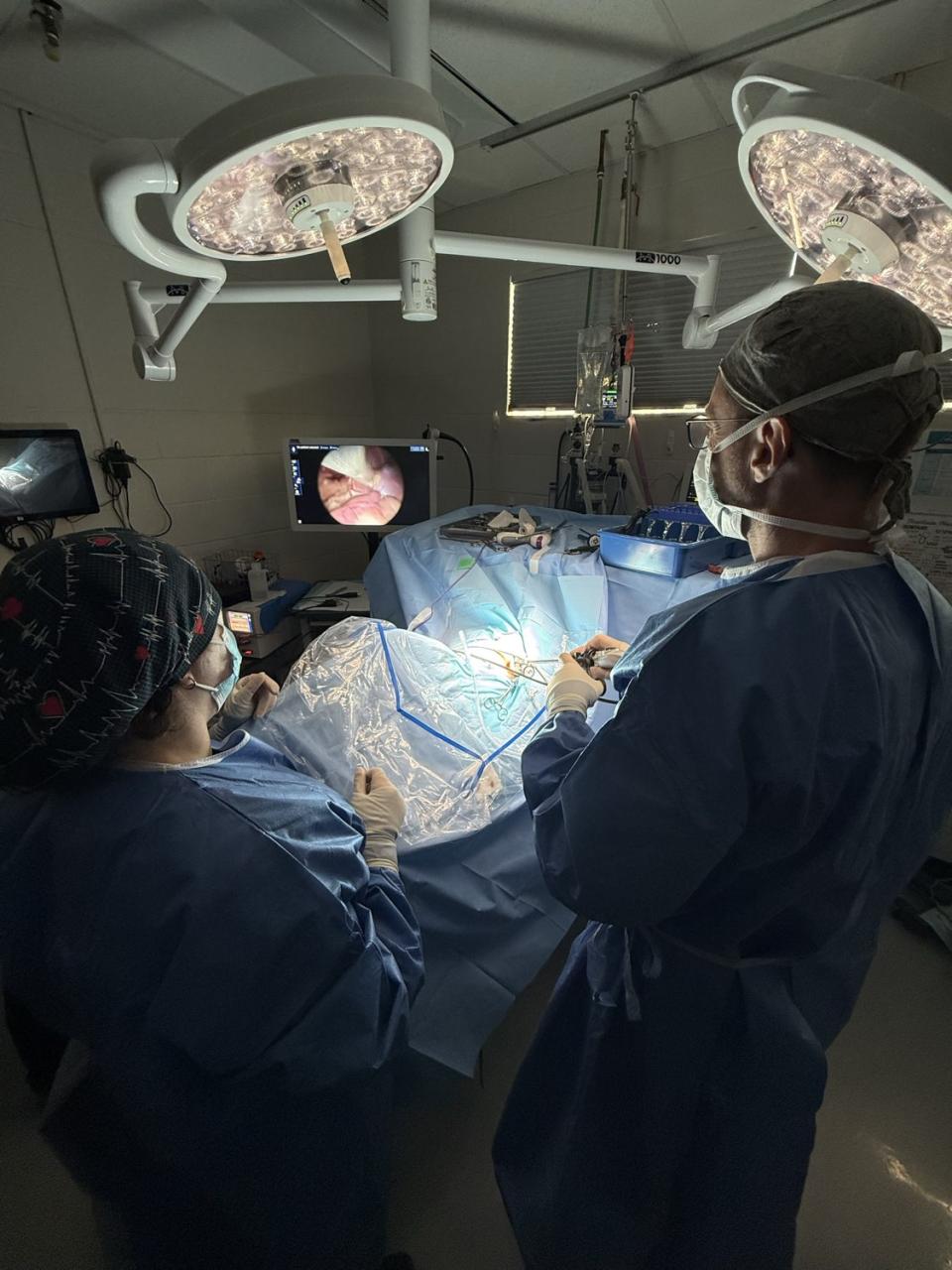
Laparoscopic ovariectomy is a minimally invasive form of spay surgery. It uses smaller access points and a magnified internal view. Some studies report less postoperative pain or faster recovery in selected dogs, but it still requires general anesthesia and is not automatically the best option for every patient.
See the approach
How laparoscopic spay works
The surgeon places a small camera and instruments through abdominal access points. The camera provides a magnified view while the ovaries are isolated, sealed, and removed. The exact number and size of the incisions depend on the technique and the individual dog.

Benefits and limits
What may be different from an open spay
In a laparoscopic ovariectomy, the ovaries are removed while the uterus remains in place unless there is a medical reason to use another approach. Removing the ovaries stops reproductive cycling and prevents pregnancy. Your veterinarian will explain which procedure is appropriate for your dog.
Smaller access points
Laparoscopy usually uses small abdominal openings rather than one longer incision. Incision size alone does not eliminate surgical or anesthetic risk.
Magnified visibility
The camera gives the surgeon a magnified view of the abdominal structures involved in the procedure.
Potential recovery benefits
Research in selected dogs has found benefits such as reduced pain scores or shorter recovery after laparoscopic ovariectomy. Results vary, and every dog still needs an individualized pain-control and activity-restriction plan.
Is your dog a candidate?
Candidacy is based on more than weight. The veterinary team may consider your dog’s age, breed, anatomy, overall health, reproductive status, previous abdominal surgery, and whether pregnancy or uterine disease is suspected. A preoperative examination and any recommended testing help the team choose between laparoscopic ovariectomy and another surgical approach.
Plan before surgery
What to expect
Can a preventive gastropexy be done at the same time?
In some dogs, a preventive gastropexy may be considered during the same anesthetic event. Gastropexy secures the stomach to the body wall to help prevent the twisting component of gastric dilatation-volvulus (GDV); it does not prevent the stomach from filling with gas. Breed, chest shape, family history, temperament, and other risk factors should be discussed with the veterinarian before deciding.
Ask whether laparoscopic spay fits your dog
Request an appointment and include your dog’s age, breed, weight, reproductive history, and any known medical conditions so the team can guide the next step.
Request AppointmentContact UsSources and further reading
- WSAVA 2024 Guidelines for the Control of Reproduction in Dogs and Cats
- Comparison of laparoscopic and open elective ovariectomy in dogs (2025)
- American College of Veterinary Surgeons: Prophylactic Gastropexy
This page provides general education and cannot determine the safest procedure for an individual dog.
Common questions