
Cascade Veterinary Clinics · Breed guide
A close companion.
A little extra care, every day.
Knowing your Bulldog makes a difference
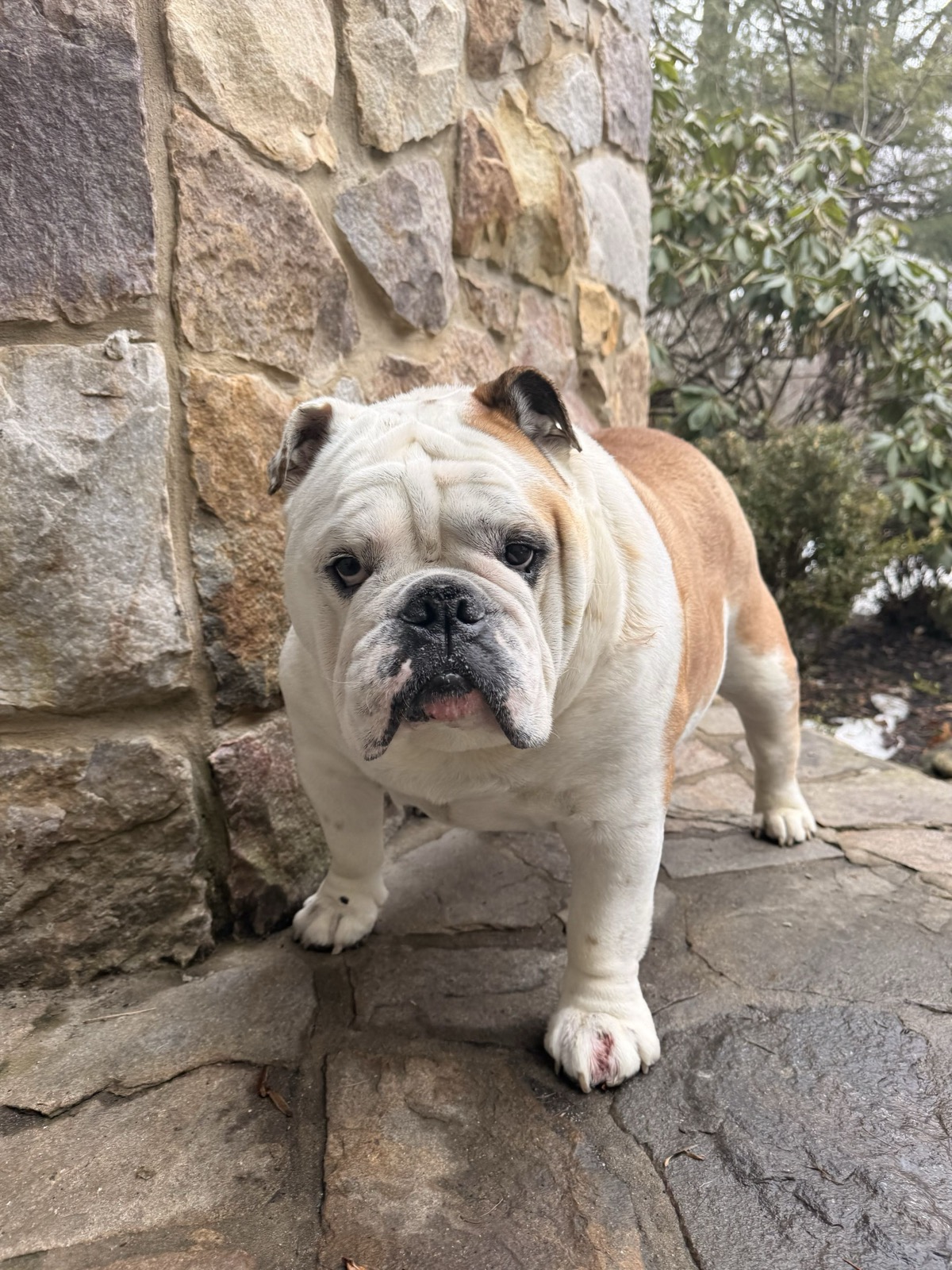
Your Bulldog may be happiest beside you, whether you are cooking dinner or settling in for the evening. Supporting that companionship means noticing the small things: how comfortably they breathe, whether their folds are sore, and how readily they recover from a walk.
The quick answer
English Bulldogs are affectionate companions whose daily care needs special attention to breathing, heat, skin folds, and body weight. Lifespan is often described as about 8 to 10 years, with substantial individual variation. Choose gentle activity, watch recovery closely, and discuss noisy or effortful breathing with your veterinarian.
Lifespan and general care: veterinarian-reviewed Bulldog overview. Breathing assessment: American College of Veterinary Surgeons.
Often affectionate and people-oriented; each dog is an individual.
Gentle activity, short training sessions, and a cool place to rest.
A short coat, plus daily attention to folds and skin comfort.
Breathing, temperature, body condition, eyes, and comfortable movement.
In this guide
Does a Bulldog fit your household?
Many Bulldogs enjoy company and a predictable routine. Plan for supervised introductions to children and other pets, gentle handling, and short, reward-based training sessions. A relaxed personality still benefits from learning everyday skills, including settling on a mat and cooperating with skin checks.
Consider the practical commitments before bringing one home: reliable indoor cooling, time for fold care, a plan for lifting or transporting a sturdy dog, and room in the budget for ongoing veterinary care. A quiet lifestyle can suit a Bulldog; limited stamina should still be discussed with a veterinarian.
A priority for this breed
Breathing deserves its own conversation
English Bulldogs can develop brachycephalic obstructive airway syndrome, or BOAS. Narrow nostrils and tissue crowding in the throat can restrict airflow. Noisy breathing, gagging, or difficulty keeping up may warrant assessment. ACVS explains the airway changes and clinical signs.
What to tell your veterinarian
- Breathing noise while awake or asleep
- Difficulty settling or interrupted sleep
- Gagging or changes in swallowing
- Reduced stamina or slow recovery
When surgery may help
An examination helps identify which structures are contributing to a dog’s symptoms. Surgery may improve airflow in appropriate patients, but the decision is individual and does not follow from breed alone.
Explore BOAS evaluation and surgeryA phone video of symptoms that occur naturally can support the conversation. Do not provoke symptoms with exercise or heat.
Breathing distress is an emergency
Labored breathing at rest, blue or gray gums, collapse, or severe heat-related distress needs immediate veterinary attention. Stop activity, move to a cooler setting, and contact an emergency veterinary team. See Cascade urgent-care information.
A daily routine built around comfort
Activity & warm weather
Choose brief, gentle outings during cooler conditions and adjust to your dog’s comfort. On hot Wenatchee afternoons, indoor enrichment may be a better choice than a walk. Provide water and a cool resting place; never leave a dog in a parked vehicle.
Skin & coat
Check facial and tail folds daily. Ask your veterinarian how to clean and dry your dog’s folds without irritating them. Regular brushing helps remove loose hair; a short coat does not eliminate skin-care needs.
Food & body condition
Measure meals, include treats in the daily food allowance, and ask for a target body condition. Extra weight can add to airway strain. Choose a complete diet suited to your dog’s life stage, with individualized advice as needs change.
Care through life
Start puppies with a veterinary care and socialization plan. Keep adult preventive and dental care current. As your Bulldog ages, bring up changes in movement, appetite, sleep, or usual activity rather than assuming they are inevitable.
Look for changes, not just diagnoses
A breed predisposition is a reason to pay attention, not a diagnosis for your dog. These observations can help your veterinary team decide what to examine.
Skin & ears
Red folds, odor, discharge, head shaking, or repeated scratching deserve a check. Moisture and friction can contribute to fold inflammation; treatment depends on the cause.
Eyes
Squinting, rubbing, redness, cloudiness, or a new pink swelling at the inner corner of the eye needs veterinary attention. Seek prompt care for a painful or suddenly changed eye.
Movement
Limping, stiffness, or reluctance to rise should be assessed. Tell your veterinarian when it began and which activities have changed.
Digestion & swallowing
Report repeated vomiting, regurgitation, or gagging. These signs can have several causes and should not be explained away as a breed quirk.
Additional context: Bulldog health and care, reviewed by veterinarians.
Before choosing a Bulldog puppy
Ask for identifiable health-screening records for both parents, then review the actual results with your veterinarian. The Bulldog Club of America’s health-testing resources and OFA’s CHIC program are starting points for checking current recommendations.
- Request registered names or numbers so records can be verified.
- Ask specifically about breathing assessments and any airway surgery in the parents.
- Discuss the parents’ eye, heart, joint, and skin history, as well as testing results.
- Ask what support the breeder provides if a health concern develops.
A CHIC number documents completion and disclosure of the required screenings; it does not mean every result was normal or guarantee a healthy puppy. Respiratory Function Grading evaluates BOAS signs, but even unaffected parents cannot guarantee unaffected puppies. These screening tools do not replace examination of your own dog.
Bring these observations to your next visit
- How your dog breathes and sleeps at home
- What a comfortable walk looks like, including recovery
- Any skin, eye, or ear changes
- Current food amounts, treats, and medications
- Questions about preventive care and future anesthesia
Common English Bulldog questions
Do all English Bulldogs need BOAS surgery?
No. Breed alone does not determine whether surgery is appropriate. A veterinarian evaluates symptoms, airway anatomy, overall health, and likely benefit before discussing a treatment plan.
Is snoring normal for an English Bulldog?
Snoring is common, but common does not mean harmless. Tell your veterinarian about noisy breathing, disrupted sleep, gagging, or slow recovery after ordinary activity. Breathing distress or collapse needs emergency care.
Can an English Bulldog live in an apartment?
Many can, provided they have a cool indoor environment, regular gentle activity, enrichment, and a daily care routine. Stairs, access to outdoor breaks, and the individual dog’s mobility and breathing matter more than floor space alone.
How should I care for my Bulldog’s skin folds?
Check folds daily and follow your veterinarian’s cleaning and drying instructions. Redness, odor, discharge, or tenderness deserves an examination. Avoid applying household cleaners or unprescribed medicated products.
What should I bring to a breathing consultation?
Bring your dog’s medical history, medication list, and notes about sleep, walks, heat tolerance, and recovery. A short video of naturally occurring symptoms can help; do not exercise your dog to provoke breathing problems.
Build a care plan for your Bulldog
Talk with Cascade Veterinary Clinics about the changes you are noticing and the questions you want to address.
Contact our teamSources
This guide draws on ACVS airway guidance, OFA respiratory grading, CHIC screening guidance, Bulldog Club of America resources, RVC skin-fold research, AVMA heat-safety guidance, and PetMD’s veterinarian-reviewed breed overview.
Recommended reading
Keep exploring dog breed guides
Compare another flat-faced breed or return to the full breed library.
French Bulldog breed guide →Explore all dog breeds →