
Giant breed care guide
Great Danes are affectionate, sensitive dogs whose size changes almost every part of daily care. A good plan covers more than food and exercise. It includes safe growth, confident handling, emergency awareness, and a home that can work for a very large dog.
See if a Great Dane fits your home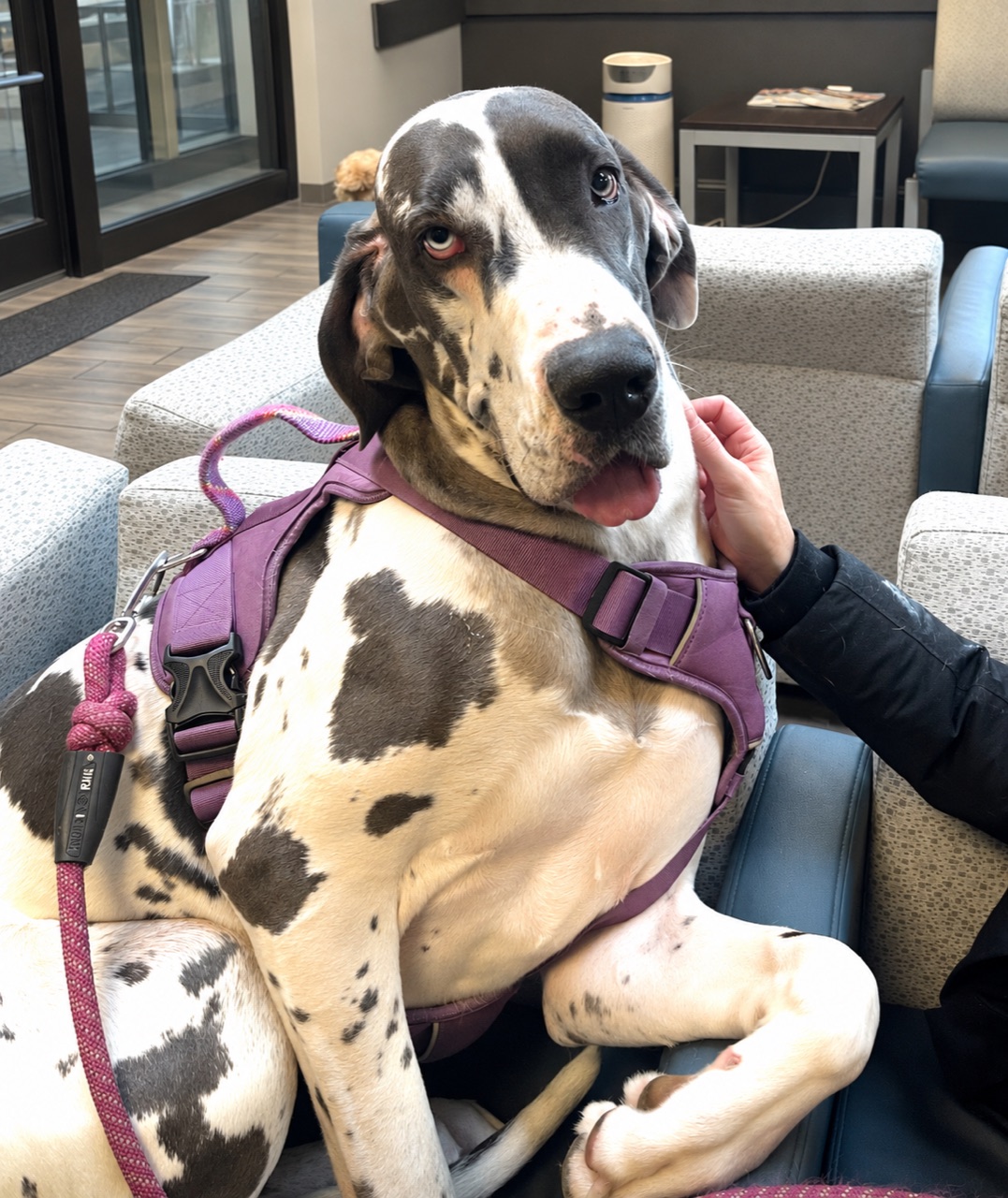
Start with the household
Is a Great Dane right for your home?
Great Danes are often calm indoors, but that does not make them low-commitment dogs. Their height, weight, reach, and strength affect transportation, training, medical care, and the physical setup of the home. Plan around the adult dog, not the puppy who first comes through the door.
Space is more than square footage
Look at stair access, slippery floors, narrow hallways, tail-height breakables, fencing, and where a full-size bed will fit. Apartment living may work when exercise, building access, noise, and emergency transport are realistically planned.
Transportation needs a plan
Your vehicle should allow the dog to enter, turn, and lie down safely. Think ahead about ramps, restraint, and how you would move an injured dog who cannot walk.
Giant size changes the budget
Food, parasite prevention, medications, crates, boarding, and procedures can cost more for a very large dog. Pet insurance or a dedicated emergency fund can make urgent decisions easier.
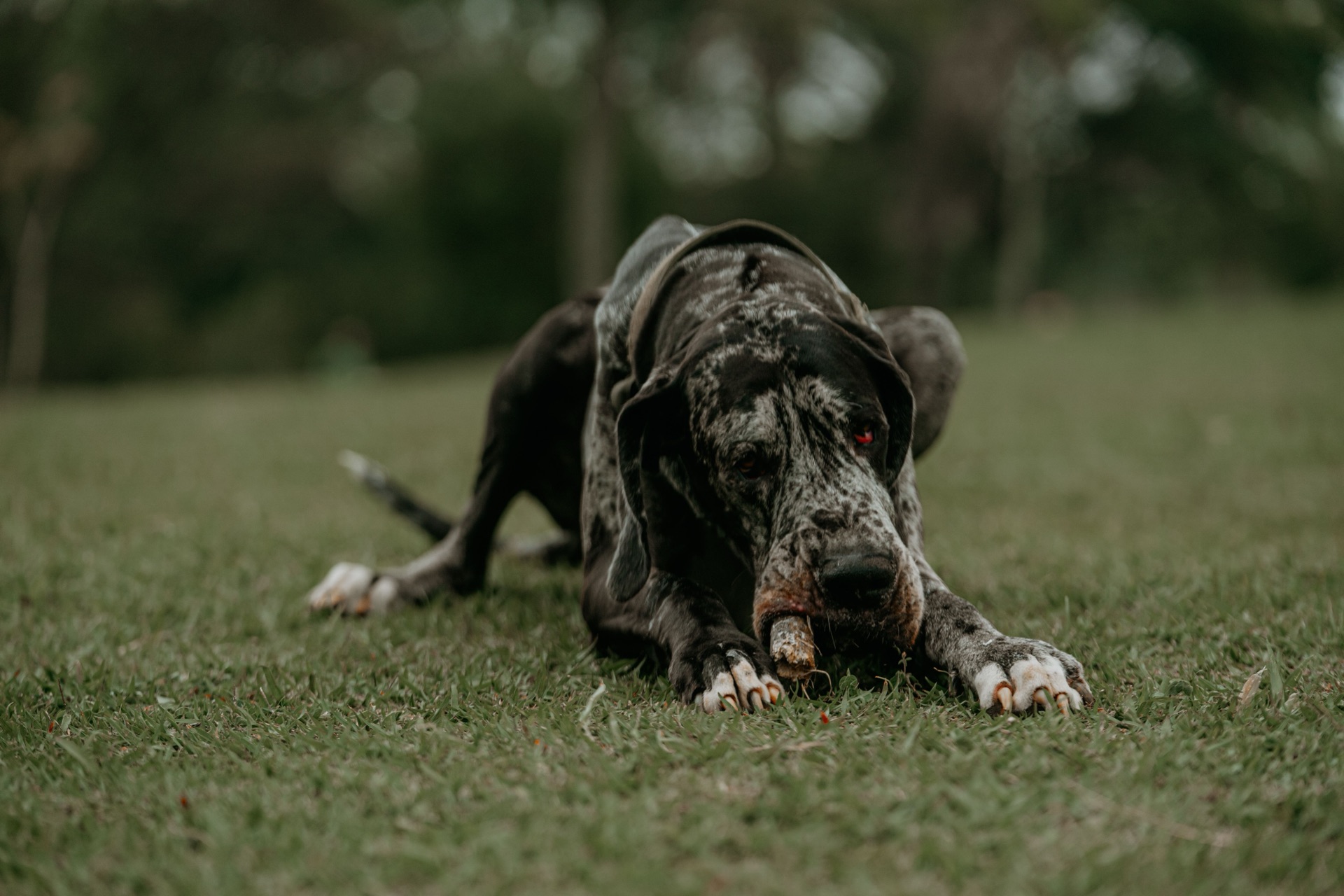
Confidence before size
Train the dog you will have, not only the puppy you have now
Why are some Great Danes so scared?
Great Danes can be sensitive to unfamiliar people, surfaces, sounds, or handling. Genetics, limited early exposure, painful experiences, and current discomfort can all contribute. Fear should not be dismissed as a funny giant-dog quirk.
Use gradual, positive exposure and reward the behavior you want. Avoid forcing a frightened dog toward the trigger. If fear appears suddenly, becomes intense, or comes with a change in movement, appetite, sleep, or social behavior, schedule a veterinary evaluation.
Foundational skills matter more in a giant dog
Practice loose-leash walking, calm greetings, waiting at doors, settling on a mat, comfortable veterinary handling, and getting into the vehicle. Short, reward-based sessions help build cooperation without relying on physical control.
Early socialization should be positive and paced for the puppy. The goal is not to meet everyone. The goal is to learn that new situations can be handled safely.
Sudden behavior change deserves attention
A normally social Great Dane who becomes withdrawn, restless, reactive, or reluctant to be touched may be uncomfortable. Behavior and health are connected, especially when a large dog is hiding pain.
Support steady growth
Great Dane puppy growth and daily care
Great Dane puppies grow quickly, but faster is not better. The diet, body condition, and activity plan should support controlled development while the skeleton is still maturing.
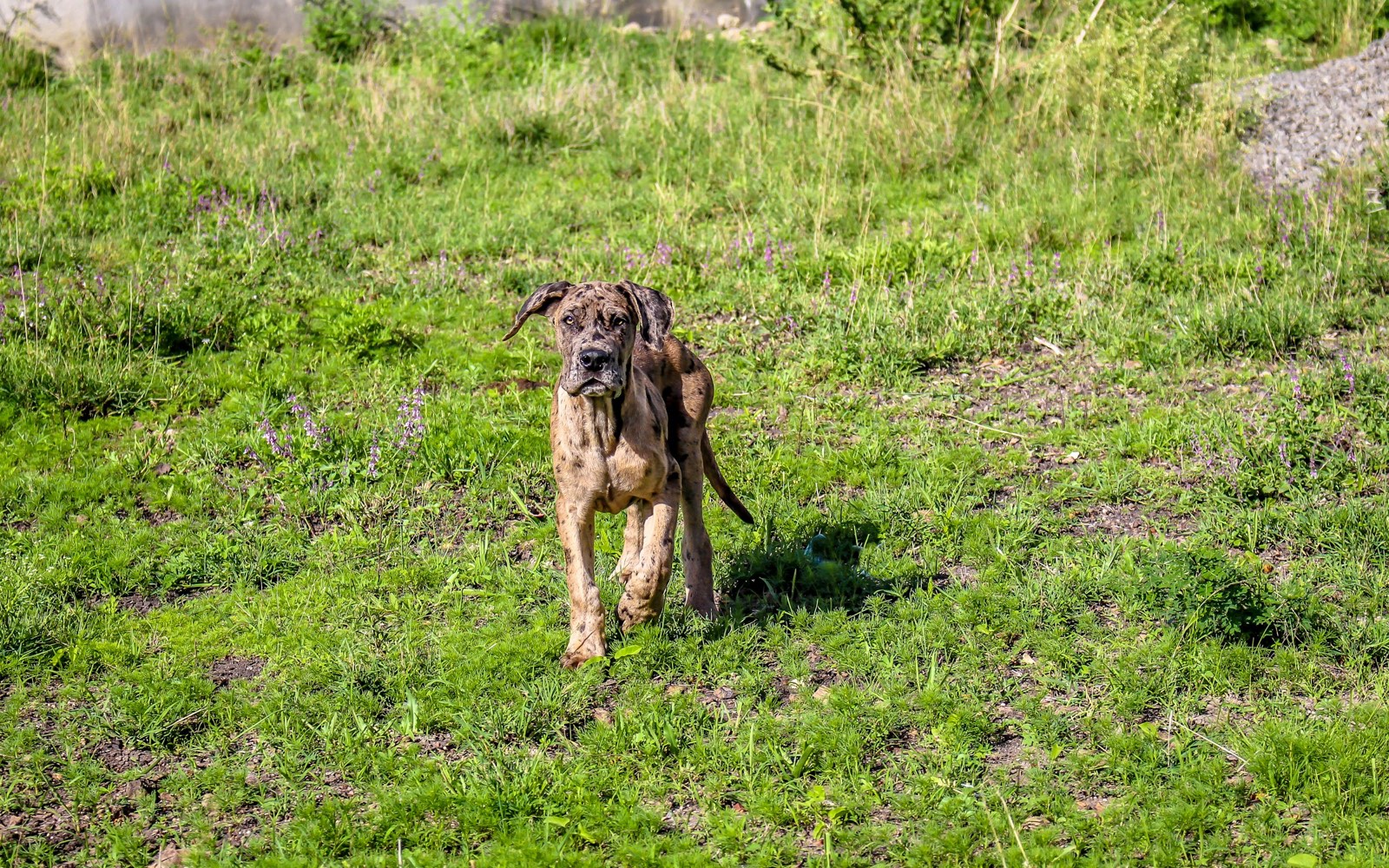
Feed for large-breed growth
Choose a complete and balanced diet formulated for the growth of large-size dogs. Measure meals, track body condition, and ask before adding calcium, vitamins, or other supplements. Extra nutrients are not automatically safer.
Use controlled, age-appropriate exercise
Walks, play, and training support fitness and confidence. During growth, avoid forced long-distance running, repeated high-impact jumping, and intense exercise that the puppy cannot stop on their own.
Protect traction and joints
Keep nails short, provide secure footing, and use rugs or runners on slick floors. Watch for limping, stiffness, reluctance to rise, an uneven gait, or a sudden drop in activity.
Build simple coat and skin routines
Brush the short coat regularly and check the skin, ears, paws, and pressure points. Clean drool from the lips and surrounding skin as needed. Ask your veterinary team about an appropriate bathing schedule.
Make preventive visits easy
Practice standing on a scale, allowing paw and ear handling, and resting on a mat. Comfortable handling makes wellness visits and future medical care safer for the dog and the care team.
Reassess as the dog ages
Great Danes may reach senior life earlier than smaller breeds. Changes in weight, stamina, sleep, breathing, mobility, or appetite deserve discussion rather than being assumed to be normal aging.
Know what to watch for
Health concerns in Great Danes
Breed risk is not a diagnosis. Your veterinarian will use the individual dog's age, family history, examination, and symptoms to decide what testing or monitoring is appropriate.
Heart disease
Dilated cardiomyopathy is an important concern in Great Danes. Contact your veterinary team for fainting, unexplained weakness, reduced stamina, coughing, a persistently fast resting breathing rate, or breathing difficulty.
Orthopedic problems
Hip dysplasia, developmental bone problems, and later joint disease can affect comfort and mobility. Limping or "growing pains" should not be diagnosed at home. A veterinary examination can distinguish temporary soreness from a condition that needs treatment.
Thyroid, eye, and skin concerns
Changes in weight, energy, coat, skin, or vision can have many causes. Mention patterns and timing at the visit. Testing should be based on the dog and the clinical question, not a generic checklist alone.
Cancer and unexplained change
New masses, persistent lameness, weight loss, reduced appetite, abdominal enlargement, or a change in normal behavior should be evaluated. Early examination can narrow the possibilities, even though not every change is serious.
When choosing a breeder, verify the records
The Great Dane Club of America recommends health screening for hips, heart, thyroid, and eyes. Ask for the registered names or numbers of both parents and verify results in the Orthopedic Foundation for Animals database. A CHIC number means the required tests were completed and made public. It does not mean every result was normal or guarantee a healthy puppy.
A true emergency
Bloat and gastric dilatation-volvulus in Great Danes
Great Danes are among the deep-chested breeds at increased risk for gastric dilatation-volvulus (GDV). The stomach fills and may twist, impairing blood flow and rapidly causing shock. A dog with suspected GDV needs immediate emergency care.
Go now for possible GDV
- Repeated attempts to vomit with little or nothing produced
- A suddenly enlarged or tight-looking abdomen
- Restlessness, pacing, or inability to get comfortable
- Heavy drooling or repeated swallowing
- Pale gums, weakness, collapse, or breathing difficulty
Do not wait for every sign or try to treat this at home. Call the nearest emergency veterinary hospital while you are leaving so the team can prepare.
What preventive gastropexy can and cannot do
A gastropexy attaches the stomach to the body wall to reduce the risk that it will twist. It does not prevent the stomach from filling with gas, so post-surgical dogs can still develop bloat and still need urgent evaluation for concerning signs. Ask your veterinarian whether preventive gastropexy and its timing make sense for your Great Dane.
Questions owners ask
Great Dane frequently asked questions
Why are Great Danes so scared?
Some Great Danes are naturally sensitive, and fear may be influenced by genetics, early experiences, limited socialization, or pain. Use gradual positive exposure rather than forcing interaction. Sudden or severe fear deserves a veterinary assessment.
How do you care for a Great Dane?
Focus on controlled growth, a lean body condition, moderate exercise, cooperative training, secure footing, preventive veterinary care, and an emergency plan that accounts for the dog's size. Daily routines should be adjusted for age and health.
What health problems are Great Danes prone to?
Important concerns include GDV, dilated cardiomyopathy, hip and other orthopedic disease, thyroid and eye conditions, and some cancers. Risk does not mean an individual dog will develop each condition. Discuss family history, screening, and symptoms with your veterinarian.
What are "growing pains" in a Great Dane?
Owners may use that phrase for several different causes of limping or discomfort in a growing dog. Because developmental bone and joint problems can look similar at home, persistent or recurring lameness should be examined rather than assumed to be normal growth.
Can a Great Dane live in an apartment?
Some can, if the dog receives appropriate exercise and the building can safely accommodate a giant dog. Consider stairs, elevator access, flooring, noise, outdoor access, and how an injured dog would be transported before deciding.
Build a care plan for your Great Dane
Whether you are preparing for a puppy or responding to a new concern, Cascade Veterinary Clinics can help you plan around your dog's age, health, and daily life.
Contact our veterinary teamRecommended reading
Keep exploring dog care
More breed guides
Sources and further reading
- Cornell University: Gastric dilatation-volvulus
- American College of Veterinary Surgeons: Gastric dilatation-volvulus
- Washington State University: Bloat and GDV
- Great Dane Club of America: Health and research
- Orthopedic Foundation for Animals: Great Dane CHIC requirements
- VCA Animal Hospitals: Great Dane breed guide